Last Updated on August 6, 2026 by Oleg Levchenko
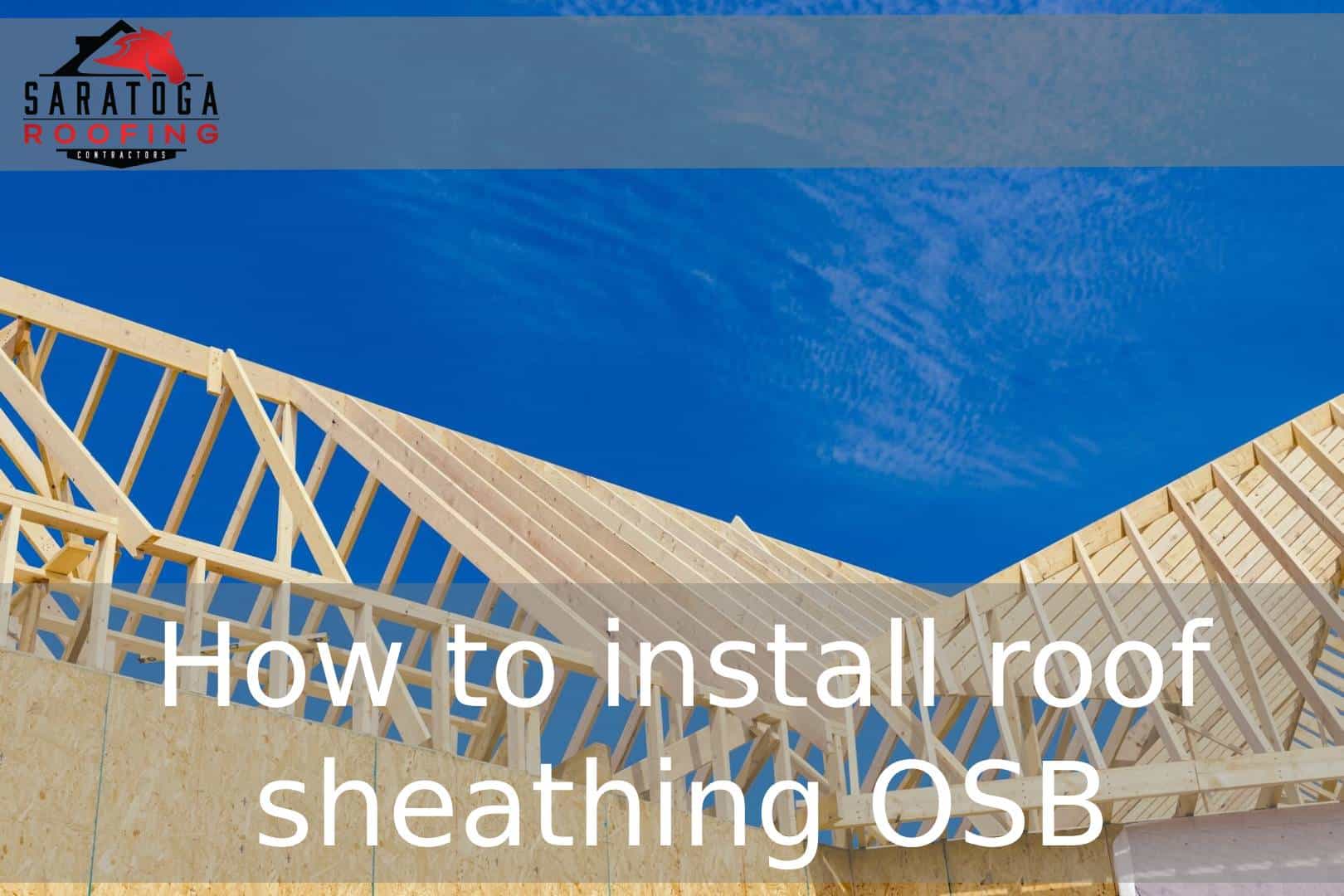
A strong, durable roof system relies on more than just high-quality shingles; it starts with a solid foundation known as the roof deck.
Oriented Strand Board (OSB) has become the industry standard for residential sheathing because it is strong, affordable, and uniform.
Learning how to install roof sheathing OSB is a critical skill for any DIY enthusiast looking to tackle a roofing project or understand the work being done on their home.
NOTE: Always prioritize safety by wearing a harness and non-slip footwear when working on a roof.
What Is OSB Roof Sheathing, and Can You Use It?
OSB (oriented strand board) roof sheathing is an engineered wood panel made from compressed wood strands bonded with waterproof resin under heat and pressure, then cut into standard 4×8-foot structural panels. Unlike plywood, it has no internal voids or knotholes, which gives it consistent strength across the entire sheet — the same property that helps it resist wind uplift on a roof.
Yes, you can use it: OSB is code-approved under the IRC/IBC and is now the most widely used roof sheathing material in new U.S. residential construction, ahead of plywood, mainly because of its lower cost and manufacturing consistency. The panel must carry an APA or equivalent span-rating stamp confirming it’s rated for roof — not just wall or floor — use before you install it.
Preparing the Roof Structure
Before you lift a single sheet of wood, you must ensure the underlying structure is sound. Inspect the trusses and rafters to ensure they are straight and free of rot.
If you are tearing off an old roof, remove all nails to create a smooth surface.
If you discover significant structural damage during this phase, a simple patch job might not suffice, and a full roof replacement could be necessary to ensure the home’s integrity.
Gather your materials and tools, specifically 7/16-inch OSB panels, 8d common nails (or ring-shank nails for better holding power), a circular saw, and a pneumatic framing nailer or hammer.
NOTE: Ensure your rafters are spaced 16 or 24 inches on center to support the OSB panels properly.
What Thickness OSB Should You Use?
| Rafter spacing | Snow load | Minimum OSB thickness |
|---|---|---|
| 16″ on center | Under 20 psf (light) | 7/16 inch |
| 16″ on center | 20–40 psf (moderate) | 7/16 inch — acceptable only at this spacing |
| 24″ on center | Any | 1/2 inch |
| Any spacing | Over 40 psf (heavy) | 1/2 inch minimum, regardless of spacing |
7/16-inch OSB — the size listed in this guide’s materials — is the standard, code-approved choice for most residential roofs with standard 16-inch rafter spacing and normal snow loads. Always check the panel’s stamped span rating against your actual rafter spacing before installing; it overrides general thickness guidelines. The same logic applies at smaller scale to sheds: a light-use shed roof with close rafter spacing can often use 3/8 to 7/16-inch OSB.
Positioning the OSB Panels
Start your OSB installation at the bottom corner of the roof, right at the eaves. Lay the OSB sheets perpendicular to the rafters (the long side of the sheet runs across the supports).
This orientation provides the maximum structural strength for the roof deck.
If you are handling a large-scale project, correct placement is the most vital part of roofing instalation.
Stagger the vertical joints of the sheathing rows so they do not align. This technique, often called a “brick pattern,” ties the rafters together and significantly strengthens the roof assembly.
NOTE: The rough, textured side of the OSB should face up to provide traction while walking on the roof.
Nailing and Spacing Requirements
Proper fastening is essential to prevent wind uplift. Drive nails every 6 inches along the edges of the panel and every 12 inches in the field (the center of the panel).
Ensure the nails penetrate the framing members by at least 1.5 inches.
One of the most common mistakes is butting the panels too tightly together.
Wood expands and contracts with humidity changes. You must leave a 1/8-inch expansion gap between all edges of the OSB sheets.
Many modern OSB panels come with a tongue-and-groove system that automatically sets this gap, but if you are using square-edged panels, use a 10d nail as a spacer to ensure consistency.
Failure to leave this gap can cause the wood to buckle, creating a wavy appearance on your shingles that might eventually require professional roof repair.
NOTE: Do not overdrive the nails; the head should sit flush with the surface, not break the skin of the wood.
Fastening Spec Sheet: How Many Nails Per Sheet?
- Fastener type: 8d common nails, or ring-shank nails in high-wind zones.
- Edge spacing: every 6 inches around the panel perimeter — roughly 48 nails on a standard 4×8 sheet.
- Field spacing: every 12 inches across the interior supports — roughly 8–10 additional nails.
- Total per 4×8 sheet: approximately 50–60 nails, varying with rafter spacing and local wind-load code.
- Penetration depth: nail heads should sit flush with the surface, penetrating at least 1.5 inches into the framing — without breaking the surface of the wood.
Handling Penetrations and Edges
As you work your way up the roof, you will likely encounter vents or chimneys. Measure and cut the OSB carefully to fit around these obstacles.
If you plan to add natural light to your home, this is the stage to cut the rough opening for a skylight installation.
Be meticulous when cutting around these openings. Poorly fitted sheathing around penetrations is a leading cause of leaks.
If you currently have leaks around existing windows, you may need skylight repair saratoga before laying down new materials.
Once the sheathing is complete, the roof is ready for the underlayment. However, don’t forget the rest of the exterior.
A seamless transition between your roof overhang and the walls is crucial, so consulting a siding contractor can help ensure your home is fully protected from the elements.
How Much Does It Cost to Install OSB Roof Sheathing?
For an average 1,500-square-foot residential roof:
- Material: 7/16-inch OSB sheets run roughly $9–$16 per 4×8 sheet — about 47 sheets for a 1,500 sq ft roof, or roughly $425–$750 in material.
- Labor: professional installation typically runs $1.50–$3.50 per square foot, or about $2,250–$4,500 for the same roof.
- Total estimate: roughly $2,700–$5,250 for materials and labor combined, before tear-off of existing sheathing if you’re replacing rather than building new.
Cost varies most with roof pitch and complexity — steep or cut-up roofs with multiple valleys take longer to sheathe than a simple gable roof. DIY installation saves on labor but carries real fall risk and the chance of costly rework if spacing or fastening isn’t code-compliant.
Frequently Asked Questions
Which side of the OSB goes down?
The smooth side goes down. OSB usually has a textured side designed to provide traction for roofers. Always install the textured side facing up to prevent slipping.
What size nails should I use for roof sheathing?
Use 8d common nails. These nails provide the necessary holding power. If you live in a high-wind area, ring-shank nails are often recommended or required by local building codes.
How much space should be between OSB sheets?
Leave a 1/8-inch gap. This space allows the wood to expand and contract with temperature and moisture changes without buckling the roof deck.
Can OSB get wet during installation?
OSB can withstand some moisture, but it should not be exposed to rain for extended periods. Cover the sheathing with underlayment (felt paper or synthetic) as soon as possible to prevent edge swelling.
Is OSB better than plywood for roofing?
OSB is the industry standard because it is more affordable and has no internal voids (knotholes). While plywood is lighter, OSB provides excellent shear strength and consistency for roofing applications.

Oleg Levchenko is a co-founder of Saratoga Roofing Co., a licensed and insured roofing contractor serving Saratoga Springs and the Capital Region for nearly a decade.
Building runs in his family – his grandfather, a farmer and builder, rebuilt his village from the ground up after WWII, and that same resilience and craftsmanship shape how Oleg runs Saratoga Roofing today.
Under his leadership, the company has completed hundreds of roof, siding, and gutter projects across Saratoga, Albany, Rensselaer, and Washington Counties, backed by a leak-proof guarantee and a 4.9-star average rating.