Last Updated on May 7, 2026 by Oleg Levchenko
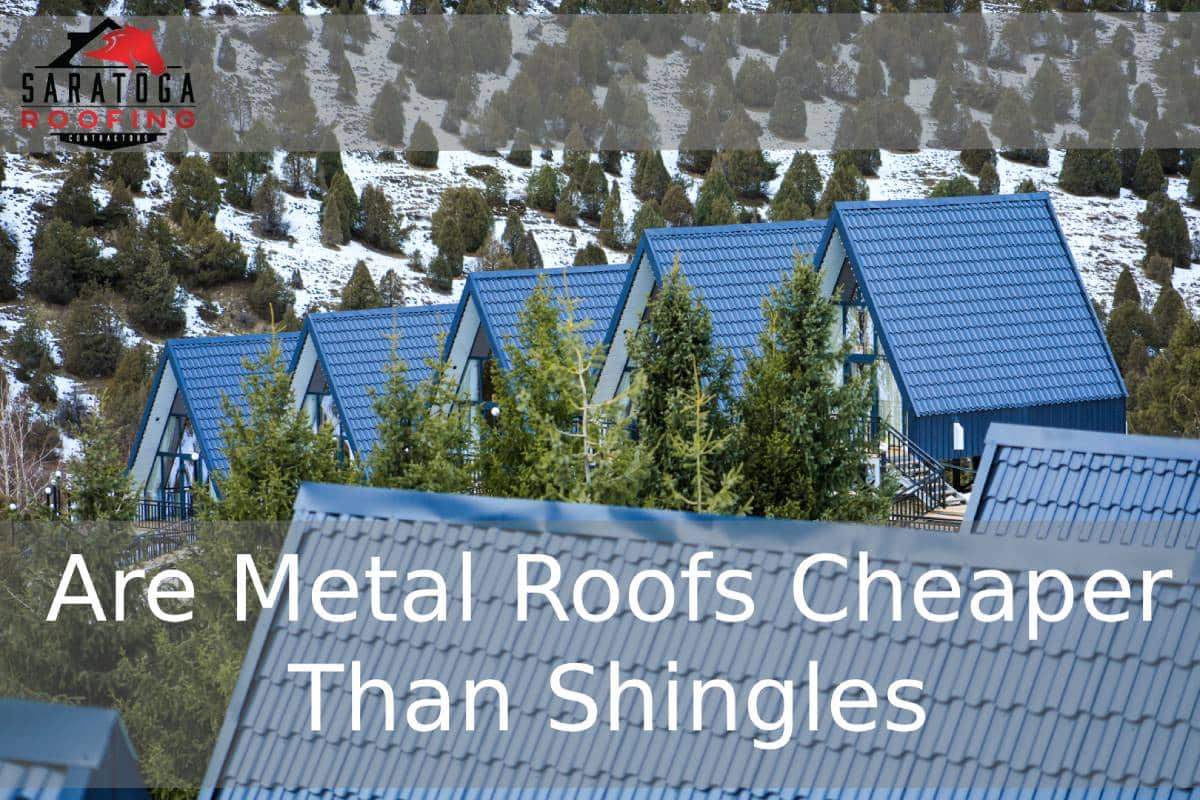
Homeowners facing a deteriorating roof eventually ask if metal roofs are cheaper than shingles in the long run.
Replacing a roof is one of the most significant financial investments you will make to protect your property.
While asphalt shingles dominate the residential market, metal roofing is rapidly gaining popularity due to its impressive durability.
This comprehensive roofing cost comparison will help you evaluate both options objectively before making a final choice.
We will examine upfront expenses, long-term savings, and performance to determine which material makes the most financial sense for your home.
The Short Answer — Upfront Cost vs. Long-Term Value
Many homeowners want a straightforward answer regarding the metal roof vs shingles cost debate.
Metal roofs are absolutely not cheaper upfront, as they typically cost 2–3x more than asphalt shingles initially.
However, a metal roof’s long-term value can make it the more economical choice over a span of several decades.
This is largely due to a remarkable lifespan of 40–70 years compared to just 15–30 years for traditional asphalt shingles.
The correct question to ask is which material is cheaper over the entire life of your home ownership.
NOTE: A homeowner who stays in their home for 30+ years will likely need to replace asphalt shingles at least once — potentially twice — during the lifetime of a single metal roof.
Upfront Installation Costs Compared
Understanding the initial financial commitment requires looking at real numbers based on 2025 market data for a standard 2,000 sq ft home.
The metal roofing cost varies widely based on the specific style, gauge, and materials chosen for the project.
Below is a structured breakdown of the estimated upfront costs for various roofing materials.
Asphalt shingles (3-tab) run between $4.50–$6.00 per sq ft installed, bringing the total to roughly $9,000–$12,000.
Architectural or dimensional shingles cost $6–$9 per sq ft, resulting in a total of $12,000–$18,000.
Luxury asphalt shingles jump to $9–$13 per sq ft, for a total installation cost of $18,000–$26,000.
On the other hand, corrugated metal roofing typically costs $7–$12 per sq ft, totaling $14,000–$24,000.
Standing seam metal, which is the most popular choice, runs $12–$18 per sq ft for a total of $24,000–$36,000.
Premium metal options like copper or zinc cost $25–$35+ per sq ft, pushing the total beyond $50,000+.
NOTE: Labor costs for metal roofing are 30–50% higher than shingles due to the specialized installation skills required, so always get 2–3 quotes from certified contractors.
If you are planning a new roofing installation, these baseline figures will help you set a realistic budget.
Lifespan — Where Metal Wins Decisively
The true financial advantage of metal becomes apparent when evaluating the expected lifespan of each material.
Standard asphalt shingles generally last between 15–30 years, depending heavily on the product quality and local climate.
In contrast, metal roofing typically survives for 40–70 years, with some premium copper and zinc roofs lasting over a century.
Let us look at a real-world calculation over a 50-year period to clearly understand the financial impact.
Installing an $8,000 shingle roof that must be replaced twice will result in $24,000 total spent on replacements.
Meanwhile, a $20,000 metal roof that lasts that entire 50-year period results in $4,000 savings overall.
NOTE: Climate matters significantly; in areas like Saratoga Springs, NY — with harsh winters, ice dams, and freeze-thaw cycles — metal roofing often demonstrates superior long-term durability over asphalt shingles.
Maintenance Costs Over Time
When comparing asphalt shingles vs metal, ongoing maintenance is a critical factor in the total cost of ownership.
Asphalt shingles generally require cleaning every 1–3 years, alongside occasional shingle replacement and granule checks.
Conversely, metal roofing demands minimal maintenance, mostly limited to periodic inspections and occasional fastener checks.
The typical repair costs for shingles range from $150–$500 per incident, and you can expect to spend $500–$1,000 every 10–15 years.
While repair costs for metal are higher at $250–$800+ due to specialized labor, these incidents occur far less frequently.
Energy Efficiency & Utility Savings
Your choice of roofing material directly impacts your monthly utility bills and overall energy efficiency.
Metal roofs actively reflect solar heat, which can reduce cooling costs by 10–25% during the warm summer months.
Asphalt shingles tend to absorb heat, which increases attic temperatures and forces your air conditioning to work much harder.
Homeowners can expect annual utility savings from metal ranging from $50–$200, depending on home size and climate.
Over a 50-year period, this translates to lifetime savings of $2,500–$10,000 from energy efficiency alone.
Insurance Benefits of Metal Roofing
Another financial advantage to consider is how your roofing choice affects your homeowner’s insurance premiums.
Metal roofs are completely non-combustible and boast the highest possible Class A fire rating.
They can also withstand 140+ mph winds, compared to the 110 mph limit for most standard asphalt shingles.
Because they offer better performance in hail events and severe weather, many insurance carriers offer 5–30% premium discounts for metal roofing.
NOTE: Always check with your insurance provider before installation — metal roof discounts vary significantly by region, carrier, and the specific product installed.
Resale Value Impact
A major home improvement project should always be evaluated by how it impacts your property’s resale value.
According to the 2025 Cost vs. Value Report, an asphalt shingle replacement offers an ROI of approximately 68%.
A metal roof replacement provides roughly 50% immediate ROI, but it adds substantial long-term value for prospective buyers.
In competitive housing markets, buyers increasingly seek out homes equipped with highly durable metal roofs.
Buyers view a metal roof as a completed upgrade, meaning they do not have to factor near-term replacement costs into their offer.
Decision Framework — Which Is Right for You?
Making the final choice between these two excellent materials depends entirely on your specific circumstances and goals.
You should choose asphalt shingles if you want the lowest upfront cost possible.
This material is also ideal if you plan to sell within 10–15 years or live in a mild climate with low storm risk.
Asphalt remains the best choice if your immediate budget is the primary constraint holding back your exterior remodeling project.
Conversely, you should choose metal roofing if you plan to stay in your home for 15+ years.
Metal is the superior option if you want minimal long-term maintenance and live in a harsh climate with heavy snow, ice, or high winds.
It is also the right path if energy efficiency and insurance savings matter to your long-term household budget.
The experts at Saratoga Roofing can help you evaluate both options with a free estimate tailored to your home’s specific needs.
Whether you need an honest inspection or a full roof replacement, our experienced local team will ensure your home is fully protected.
FAQ
Q1: Is a metal roof worth the extra cost?
For long-term homeowners staying 15 or more years, metal roofs are often worth the investment.
This is due to their superior lifespan, lower maintenance requirements, energy savings, and potential insurance discounts.
For those planning to sell within a few years, asphalt shingles typically offer a better immediate return on investment.
Q2: What is the cheapest type of metal roofing?
Corrugated or ribbed metal panels are the most affordable metal option on the market today.
These typically run $7–$12 per square foot installed.
Standing seam metal is more expensive but offers a cleaner appearance and better long-term water resistance.
Steel is generally more affordable than premium materials like aluminum, copper, or zinc.
Q3: Can you put a metal roof over existing shingles?
In some cases yes, but it depends heavily on your local building codes and the condition of existing shingles.
It also depends on the structural load capacity of your home’s current roof decking.
Adding a second layer avoids tear-off costs but can trap moisture if there are existing ventilation issues.
Most professional roofers recommend a full tear-off for optimal results and a longer lasting installation.
Q4: How much louder is a metal roof in rain?
With proper insulation and underlayment, modern metal roofs are not significantly louder than asphalt shingles.
Without adequate attic insulation, metal can create more noise during heavy rain or intense hail storms.
Most homeowners report no meaningful difference in noise levels with a quality, professional installation.
Q5: Does a metal roof increase home value in the Saratoga Springs area?
In the Saratoga Springs, NY area, metal roofs are increasingly valued by buyers due to the region’s harsh winter climate.
They provide excellent protection against ice dam risks and the area’s notoriously high snow loads.
A metal roof signals low near-term maintenance costs and long-term reliability.
This makes the property highly attractive to prospective buyers navigating a competitive local real estate market.

Oleg Levchenko is a co-founder of Saratoga Roofing Co., a licensed and insured roofing contractor serving Saratoga Springs and the Capital Region for nearly a decade.
Building runs in his family – his grandfather, a farmer and builder, rebuilt his village from the ground up after WWII, and that same resilience and craftsmanship shape how Oleg runs Saratoga Roofing today.
Under his leadership, the company has completed hundreds of roof, siding, and gutter projects across Saratoga, Albany, Rensselaer, and Washington Counties, backed by a leak-proof guarantee and a 4.9-star average rating.