Last Updated on June 8, 2026 by Oleg Levchenko
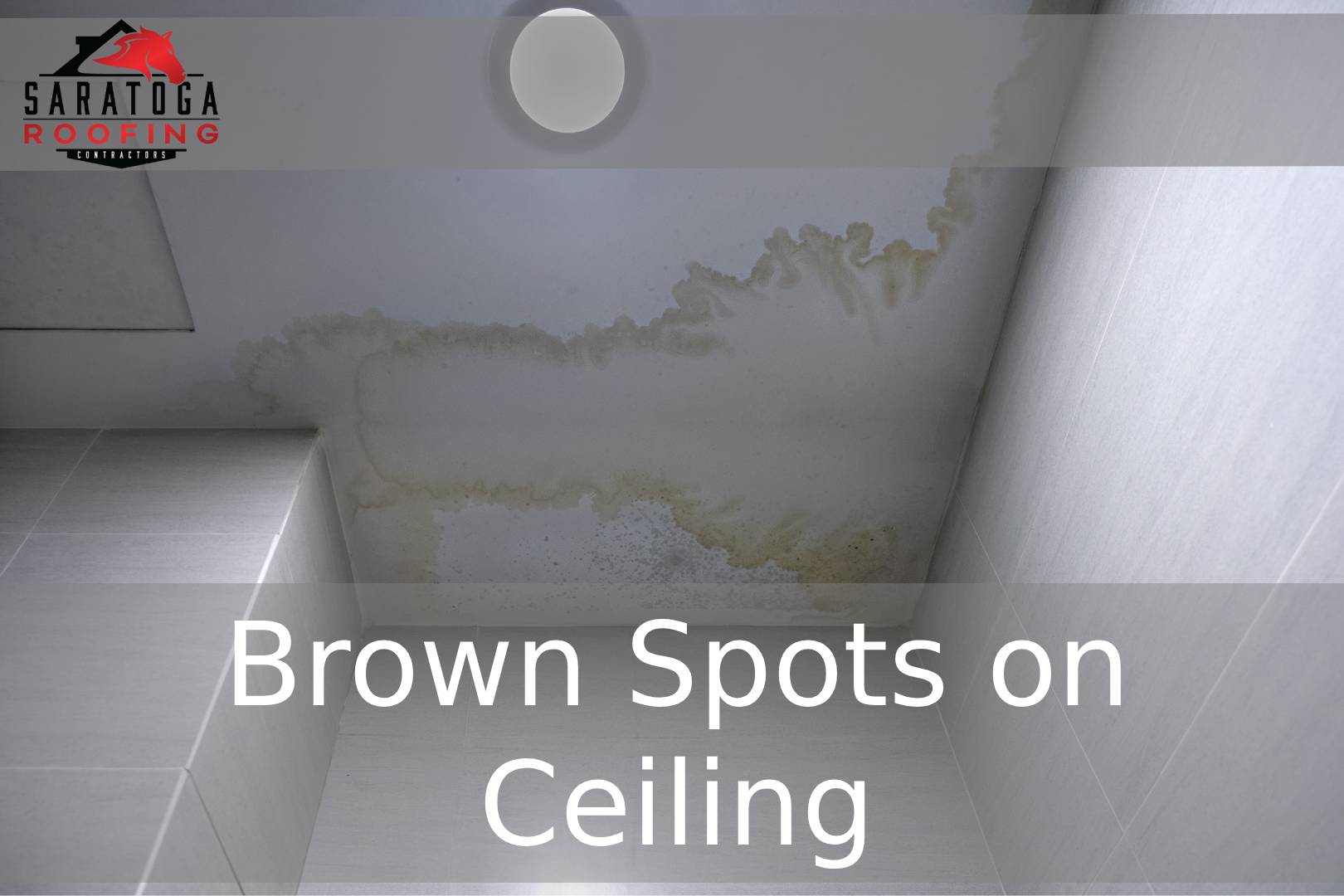
Brown spots on a ceiling usually indicate active water intrusion, often caused by a roof leak. You must identify the source—such as hail-damaged roof repair needs, missing shingles, or a leaking skylight—and schedule a professional inspection to prevent structural rot and mold growth.
Brown ceiling stains are almost always a clear warning sign of water intrusion inside your home. In many cases, the primary source of this moisture is a serious roof leak that has breached your attic.
When you notice a brown spot on your ceiling, it means water has already pooled above the drywall and pulled minerals through the paint. The longer you wait to address this issue, the more expensive your roof repairs are guaranteed to become.
You might assume it is just a cosmetic issue, but these stains often point to severe storm damage hidden above. Often, homeowners do not realize why hail damage is bad for a roof until these ugly brown spots suddenly appear in their living room.
NOTE: If you see a new ceiling stain, do not ignore it—water could be actively pooling and threatening to collapse your drywall.
5 Most Common Roofing Problems That Cause Brown Ceiling Stains
Damaged or Missing Shingles
High winds and severe weather can easily tear asphalt shingles right off your roof deck.
Even if the shingles are still attached, hail-damaged shingles can lose their protective granules and allow water to seep through the underlayment. This granule loss leaves your roof vulnerable to ongoing water intrusion during every rainstorm.
Leaking Roof Flashing
Flashing is the protective metal installed around vulnerable roof seams, chimneys, and valleys. When this metal bends, rusts, or cracks due to age or hail impact, water can easily bypass your main roofing materials.
A compromised flashing system is a leading cause of residential roof leaks in upstate New York.
Roof Vent Leaks
Your roof vents are essential for proper attic ventilation, but their seals can deteriorate over time. If the caulking or rubber boots around these vents crack, rainwater will flow directly into your attic space.
Skylight Leaks
Skylights offer beautiful natural light, but they are also common culprits for water intrusion. The flashing around a skylight can fail, allowing moisture to drip directly onto the ceiling below.
If you suspect this is your issue, you may need professional skylight installation to properly secure and waterproof the opening.
Clogged Gutters and Ice Dams
In areas like Saratoga Springs, NY, winter weather creates severe challenges for your gutter system. When gutters clog, water backs up and freezes, creating destructive ice dams that push water under your roof shingles.
This trapped water melts and flows straight into your home, causing massive ceiling water damage.
How to Tell If the Stain Is Coming From Your Roof
You need to know the specific roof hail damage signs to determine if your stain is roof-related. One obvious sign is if the water stain gets noticeably larger immediately after heavy rain.
You should also check if the stain is located on the highest floor of the home, directly beneath the roof structure.
If you safely inspect your attic, you might physically notice water in the attic or damp insulation. Stains that appear directly near a chimney, skylight, or roof vent are almost certainly caused by exterior roof leaks.
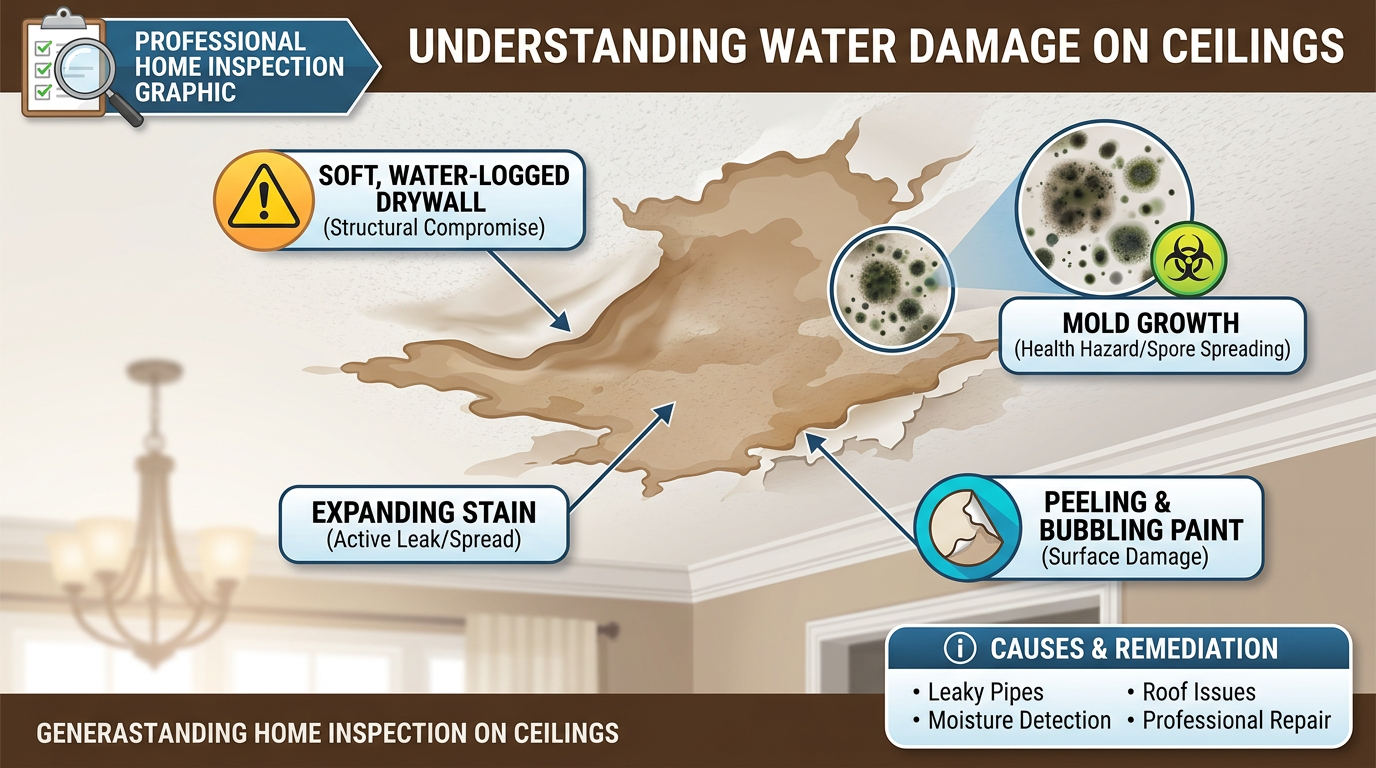
If the ceiling drywall feels soft, damp, or starts sagging, you have an active and dangerous moisture problem.
NOTE: Never poke a sagging ceiling without a bucket underneath, as trapped water may instantly pour into your room.
Brown Spot on Ceiling but No Active Leak?
Sometimes, you might find that the roof leaked weeks or even months ago, but the spot remains dry today. Previous storm damage could have caused a temporary leak that only happens when wind blows rain from a specific direction.
You might also be dealing with a small, intermittent leak that only breaches your home during the heaviest downpours. Condensation in the attic is another hidden culprit, caused by poor attic ventilation trapping warm, moist air inside.
Additionally, ice dam damage from the previous winter may have left a stain that you are just now noticing in the brighter summer light.
What Happens If You Ignore a Brown Ceiling Stain?
Ignoring these warning signs will eventually lead to dangerous mold growth inside your walls and ceilings. Water intrusion will also completely ruin your attic insulation, drastically lowering your home’s energy efficiency.
As the moisture continues to saturate the materials, your drywall deterioration will worsen until the ceiling crumbles. Prolonged exposure to water will inevitably cause structural wood rot in your roof trusses and joists.
Ultimately, putting off a minor inspection will force you to pay for much more expensive roof repairs down the road. In some extreme cases, the decay becomes so severe that a complete roof replacement becomes your only safe option.
What Should You Do Next?
If it is safe to do so, carefully check your attic for any visible signs of moisture. Use a flashlight to look for wet wood, dark stains on the rafters, or dripping water during a storm.
You should immediately take photos of the ceiling stain to track its growth and provide evidence for your insurance company. Filing an insurance claim hail damage roof requires clear documentation of the timeline and the extent of the deterioration.
Finally, you must schedule a professional roof inspection with a qualified local contractor. When it comes to protecting your home in our local climate, the experts at Saratoga Roofing have the experience needed to properly diagnose and fix any storm damage before it ruins your home.
FAQ
Does a brown ceiling stain always mean a roof leak?
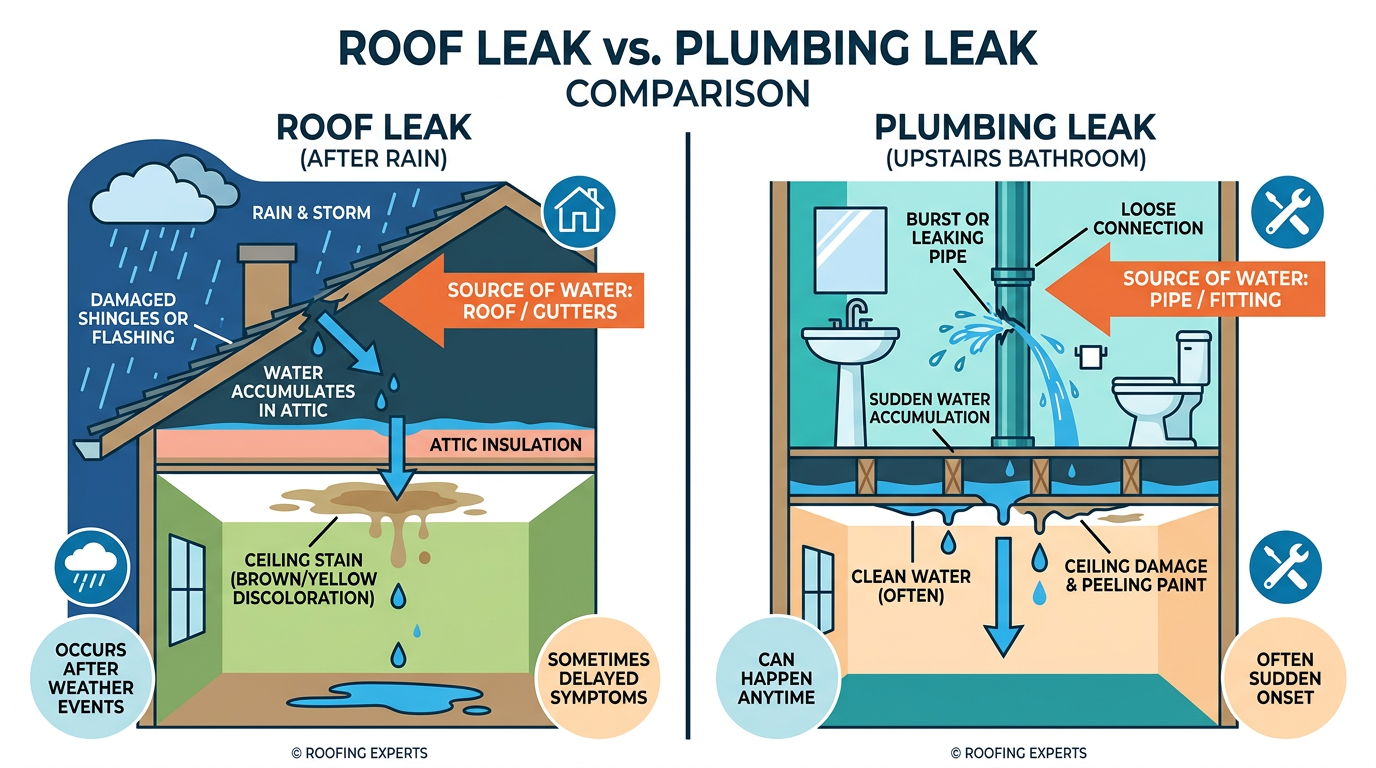
No, a brown ceiling stain does not always mean your roof is leaking. It can also be caused by leaking plumbing pipes, overflowing HVAC condensation drain pans, or severe condensation issues in an improperly ventilated attic. However, if the stain is on the top floor of your home, a roof leak is the most likely culprit.
Can a small stain indicate a major roofing problem?
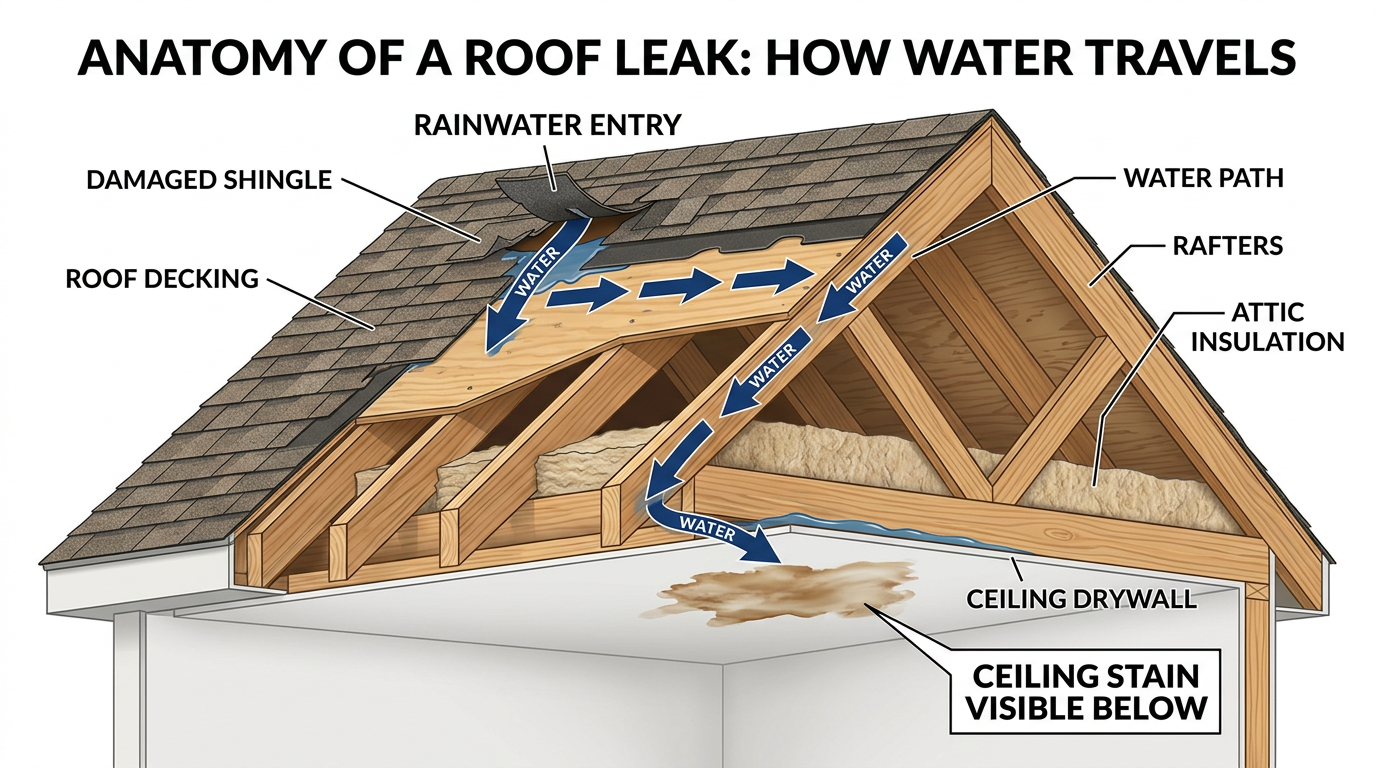
Yes, a very small ceiling stain can actually be a sign of massive hidden damage. Water can travel a long distance along roof trusses and attic floors before finally pooling and seeping through your drywall. By the time a small spot appears, your insulation and wood decking may already be severely saturated.
Why does the stain get bigger after rain?
If the ceiling stain expands or darkens after a rainstorm, it means you have an active water intrusion issue. The rainwater is continuously bypassing your damaged shingles, flashing, or vents, adding fresh moisture to the pooling water above your ceiling drywall.
Can I simply paint over the stain?
You should never just paint over a water stain without fixing the underlying problem first. If you fail to schedule a professional hail storm roof inspection and address the actual leak, the water will simply ruin the new paint and continue rotting your home’s structural wood.
How much does roof leak repair cost?
The cost of roof leak repair varies widely depending on the severity of the damage and the materials involved. Fixing a simple missing shingle might be relatively inexpensive, while repairing extensive structural wood rot or replacing damaged skylights will cost significantly more.

Oleg Levchenko is a co-founder of Saratoga Roofing Co., a licensed and insured roofing contractor serving Saratoga Springs and the Capital Region for nearly a decade.
Building runs in his family – his grandfather, a farmer and builder, rebuilt his village from the ground up after WWII, and that same resilience and craftsmanship shape how Oleg runs Saratoga Roofing today.
Under his leadership, the company has completed hundreds of roof, siding, and gutter projects across Saratoga, Albany, Rensselaer, and Washington Counties, backed by a leak-proof guarantee and a 4.9-star average rating.