Last Updated on June 8, 2026 by Oleg Levchenko
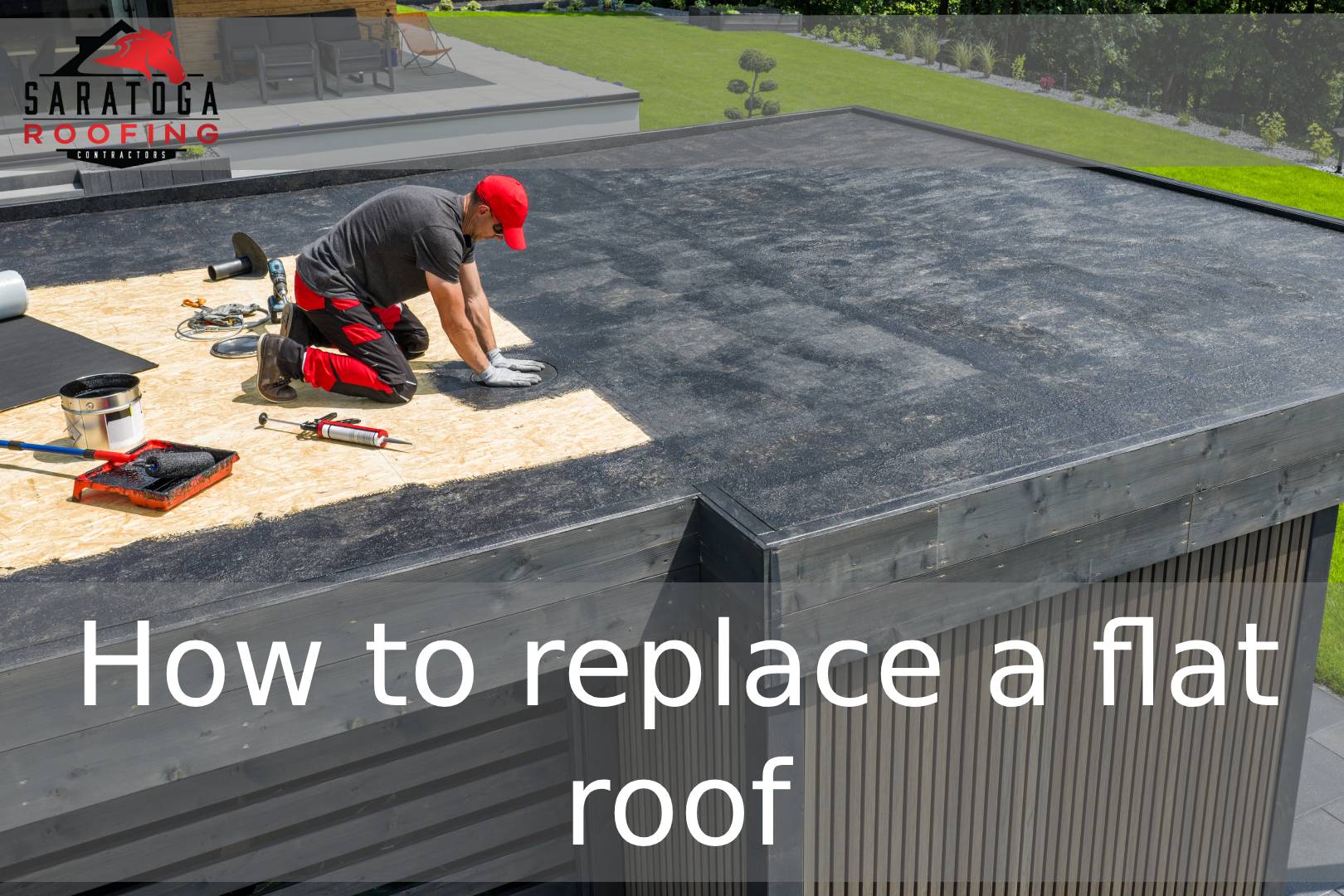
To replace a flat roof, you must first inspect the existing structure for severe deterioration, such as a waterlogged deck or compromised membrane.
Next, remove the old materials, repair the underlying roof deck, install proper rigid insulation, and apply a new waterproof system like EPDM or TPO.
Always hire a certified local contractor to ensure proper drainage and warranty compliance.
Replacing a flat roof is a major structural project that protects your home from severe weather and persistent moisture.
Many homeowners only realize they need an upgrade when water stains appear on their interior ceilings after a major storm.
If you live in a region with volatile weather, understanding the replacement process helps you make informed decisions about your property.
Navigating this complex process requires a solid understanding of structural components, modern materials, and storm impact physics.
Let us explore exactly how flat roofs fail, how severe weather accelerates that failure, and what the replacement process entails.
When Does a Flat Roof Need Replacement?
Your flat roof constantly battles against pooling water, UV radiation, and severe temperature fluctuations.
Over time, these elements break down the waterproofing capabilities of the membrane and expose your structural deck to moisture.
You should consider a full replacement when you notice widespread blistering and cracking across the roof surface.
Persistent leaks that return after multiple patching attempts strongly indicate that the underlying insulation is completely saturated.
NOTE: If your flat roof sags significantly in the middle, you must schedule an immediate structural evaluation to prevent a catastrophic collapse.
Timeline Progression: Why is hail damage bad for a roof?
Many property owners wonder why is hail damage bad for a roof when the initial impacts seem purely cosmetic.
The truth is that hail creates an immediate vulnerability that progressively destroys the structural integrity of your building.
In the first few days following a storm, you might only notice minor granule loss on modified bitumen or small circular dents on single-ply membranes.
Within three to six months, these compromised areas suffer from UV degradation, causing the membrane to become brittle and shrink.
By the one-year mark, microscopic fractures expand into active leaks that allow water to silently rot your insulation and wood decking.
If you observe roof hail damage signs like bruised membranes or dented metal flashings, the deterioration clock has already started ticking.
Can a Flat Roof Be Repaired Instead?
Sometimes, a targeted hail damage roof repair can extend the lifespan of your roof if the deterioration is isolated.
Small punctures or localized blistering can often be patched using compatible sealants and membrane offcuts.
However, if your insulation board feels spongy when you walk on it, a simple repair will trap moisture inside the system and accelerate mold growth.
You must choose a complete roof replacement when more than 25% of the surface area is compromised or if the membrane has surpassed its 20-year lifespan.
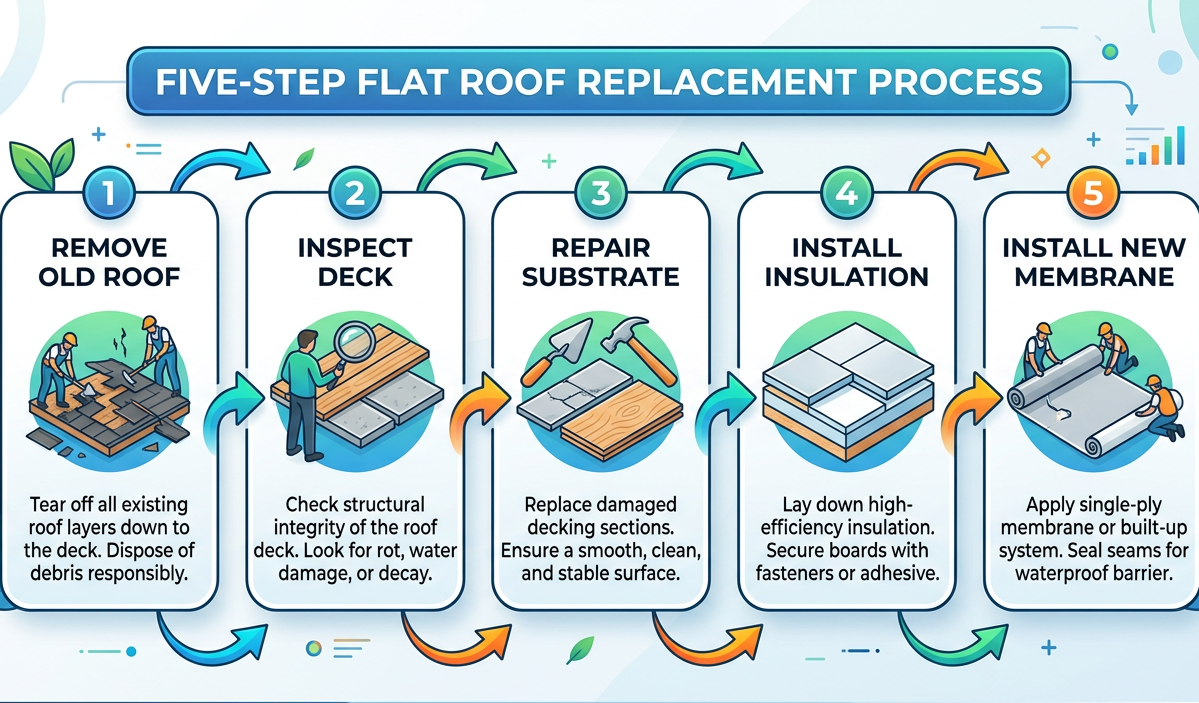
Step 1: Inspect the Existing Roof
A thorough evaluation dictates the entire scope of your upcoming construction project.
A professional contractor will examine the edge metal, scuppers, and drains for any hidden blockages or rust.
They will also perform a comprehensive hail storm roof inspection to document the exact cause of the membrane failure.
This documentation is incredibly important if you plan to file an insurance claim hail damage roof request with your provider.
Step 2: Remove Old Roofing Materials
The tear-off phase requires intense physical labor and strict safety protocols to protect the surrounding property.
Workers will utilize specialized heavy-duty roofing spades to pry up the old membrane, saturated insulation, and rusted fasteners.
All debris must be carefully transported to a designated dumpster to prevent damage to your siding or landscaping.
NOTE: Never allow debris to accumulate near open drains, as clogs during the construction phase can cause sudden structural flooding.
Step 3: Repair or Replace the Roof Deck
Once the old system is completely removed, the bare structural deck is exposed for a rigorous safety evaluation.
Any rotted plywood, damaged oriented strand board (OSB), or rusted steel panels must be cut out and replaced immediately.
The deck must be completely dry, smooth, and structurally sound before any new materials are attached.
Skipping this crucial step will automatically void the manufacturer warranty on your new membrane.
Step 4: Install Insulation
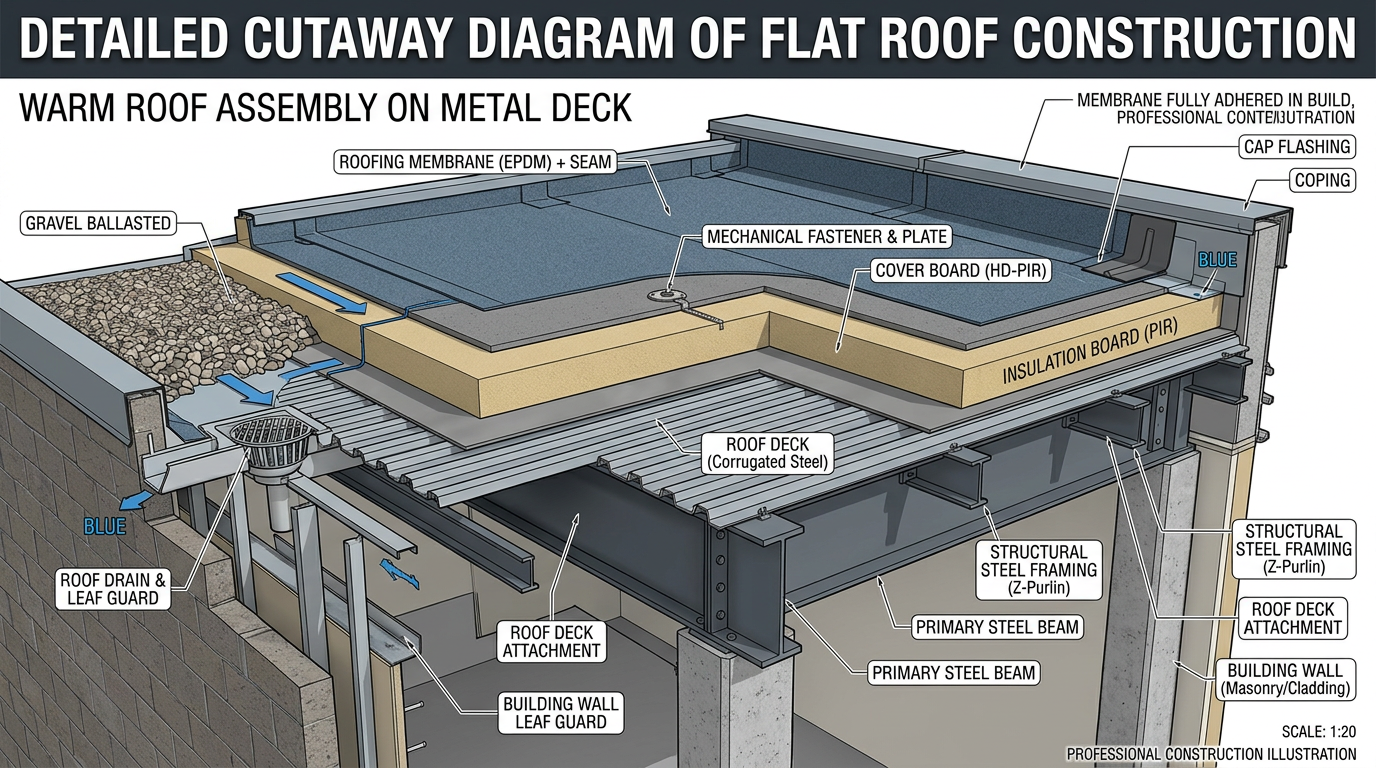
Proper insulation regulates your building’s interior temperature and creates the necessary slope for water drainage.
Installers will lay down rigid polyisocyanurate (polyiso) boards using heavy-duty mechanical fasteners or specialized construction adhesives.
They will use carefully measured tapered insulation to ensure that rainwater flows directly toward the scuppers and drains.
If you are planning a skylight installation during the project, the insulation must be meticulously cut and sealed around the new curb.
Step 5: Install the New Roofing System
Selecting the correct waterproofing membrane is the most important decision for your specific climate and building structure.
Here are the most common and reliable materials utilized in the modern commercial and residential roofing industry.
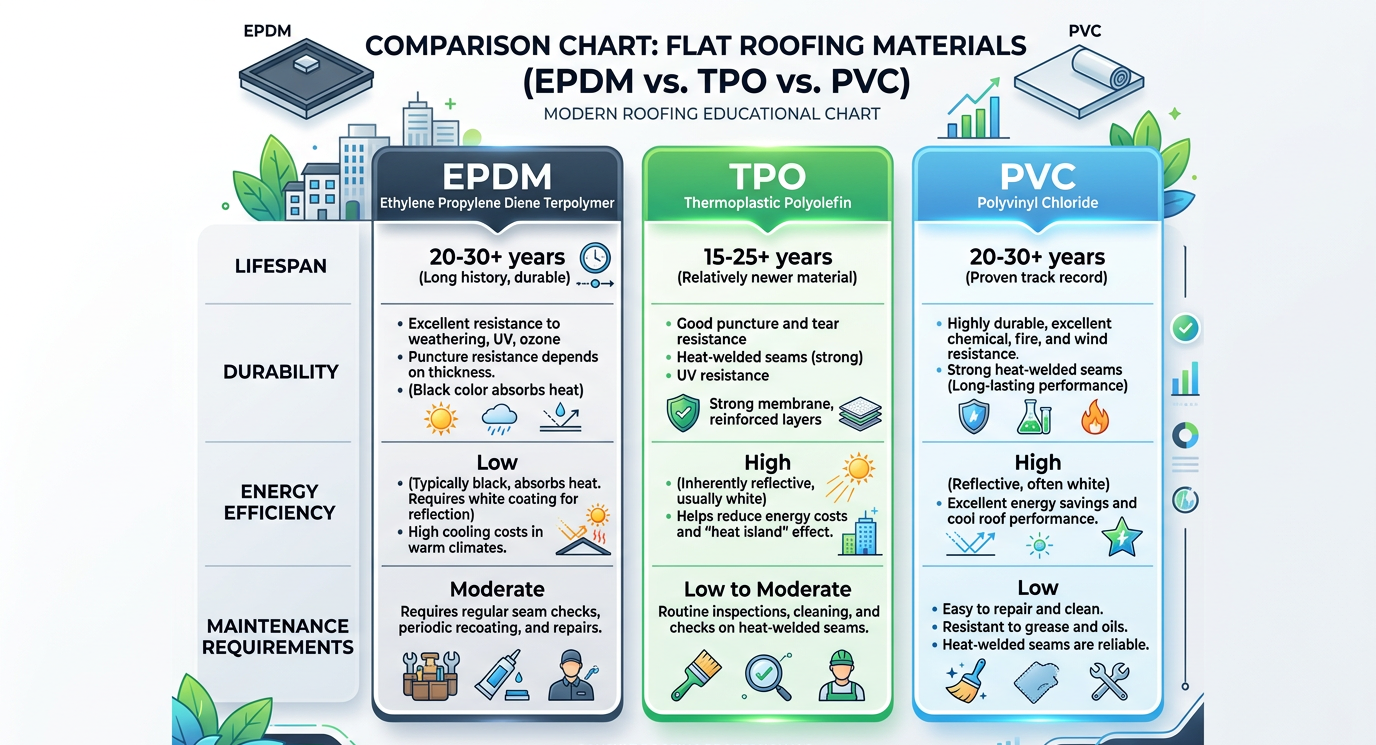
EPDM
Ethylene Propylene Diene Monomer (EPDM) is a highly durable synthetic rubber membrane recognized for its dark color.
It offers exceptional flexibility in freezing temperatures, making it a reliable choice for harsh winter climates.
TPO
Thermoplastic Polyolefin (TPO) is a highly reflective white membrane that dramatically reduces summer cooling costs.
The seams are permanently welded together using a robotic hot-air gun, creating a seamless, watertight barrier.
PVC
Polyvinyl Chloride (PVC) is a premium thermoplastic membrane that offers superior resistance to chemical exposure and animal fats.
It is highly recommended for restaurant buildings or facilities with heavy rooftop HVAC equipment.
Modified Bitumen
Modified Bitumen utilizes asphalt layered with heavy fiberglass or polyester reinforcement mats.
While older properties still use this material, you must be cautious about hail damage to shingles and granule loss after severe weather events.
How Long Does Flat Roof Replacement Take?
A standard residential flat roof replacement typically requires two to three full days of labor to complete.
Larger commercial properties or projects requiring extensive structural deck repairs can extend the timeline to a full week or more.
Weather conditions play a massive role, as contractors cannot expose an open roof deck during active rain or snowstorms.
How Much Does Flat Roof Replacement Cost?
Pricing fluctuates dramatically based on the total square footage, the selected membrane material, and the thickness of the required insulation.
On average, property owners can expect to invest between $8 and $14 per square foot for a complete professional tear-off and replacement.
Because extreme weather in Saratoga Springs, NY can destroy a poorly installed roof, investing in premium materials and skilled labor is always the safest financial strategy.
If you are dealing with storm damage, the experienced team at Saratoga Roofing can help you navigate the installation process with local expertise and unmatched precision.
Frequently Asked Questions
Can you install a new flat roof over an old one?
In some jurisdictions, building codes allow you to install a second roofing system directly over a single existing layer.
However, this practice traps hidden moisture, hides rotting structural decks, and adds excessive weight to the building frame.
Professional contractors highly recommend a complete tear-off to ensure a watertight, fully warrantied installation.
What is the best material for a flat roof?
The optimal material depends entirely on your specific climate, building usage, and energy efficiency goals.
TPO is generally considered the best all-around option due to its highly reflective surface, heat-welded seams, and excellent puncture resistance.
EPDM remains a fantastic, cost-effective alternative for property owners who prioritize extreme weather flexibility and long-term durability.
How long does a flat roof replacement take?
Most residential flat roof replacements can be completed in two to three days by a professional, organized crew.
The timeline heavily depends on the amount of saturated insulation that must be removed and the condition of the underlying structural wood deck.
Unexpected rain delays or complex architectural features will naturally extend the duration of the project.
How long does a flat roof last?
A modern, professionally installed flat roof system typically lasts between 20 and 30 years with proper routine maintenance.
PVC and high-grade TPO membranes often push the higher end of that lifespan, especially if the seams are welded correctly.
However, neglecting bi-annual inspections or ignoring ponding water can reduce the functional lifespan to under 10 years.
Should I repair or replace my flat roof?
You should pursue a repair if the membrane is under 10 years old and the damage is isolated to a few small punctures.
If you are experiencing recurring leaks, widespread membrane shrinkage, or spongy insulation, a full replacement is the only safe structural option.
Always hire a certified contractor to perform a core sample test to determine how much moisture is trapped beneath the surface before making your decision.

Oleg Levchenko is a co-founder of Saratoga Roofing Co., a licensed and insured roofing contractor serving Saratoga Springs and the Capital Region for nearly a decade.
Building runs in his family – his grandfather, a farmer and builder, rebuilt his village from the ground up after WWII, and that same resilience and craftsmanship shape how Oleg runs Saratoga Roofing today.
Under his leadership, the company has completed hundreds of roof, siding, and gutter projects across Saratoga, Albany, Rensselaer, and Washington Counties, backed by a leak-proof guarantee and a 4.9-star average rating.