Last Updated on June 8, 2026 by Oleg Levchenko

Quick answer: Black shingles absorb more heat than lighter colors, but proper attic ventilation often minimizes the impact. This is usually the biggest concern homeowners have when choosing new roofing materials.
Choosing the right roof color is a major decision for any homeowner. Many people wonder if black roof shingles are a bad idea due to heat concerns.
The truth is that darker shingles do absorb more energy from the sun. However, modern roofing technology has changed how we approach this issue entirely.
If you are planning a roof replacement, understanding how color affects performance is crucial.
NOTE: Your roof’s color impacts both your home’s curb appeal and its overall energy efficiency.
Do Black Roof Shingles Make a House Hotter?
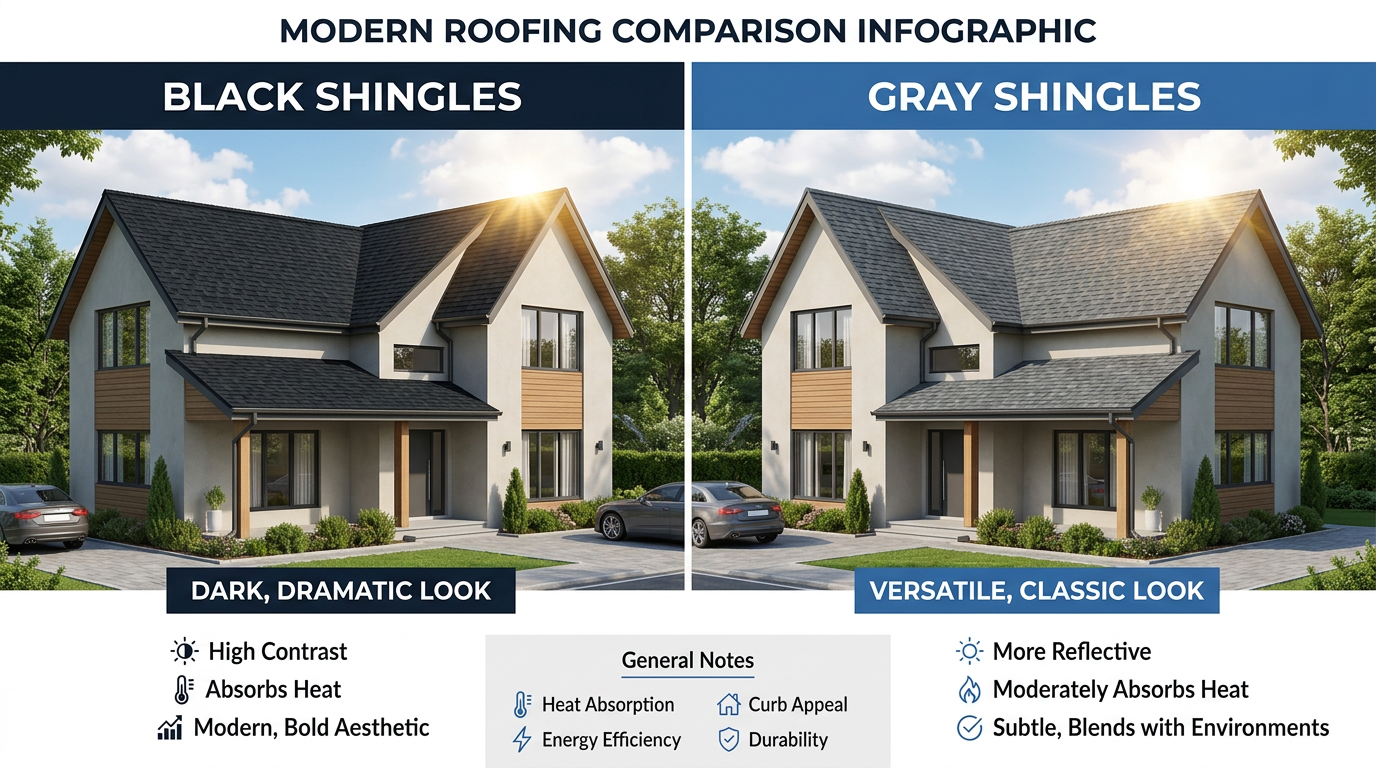
It is a scientific fact that black materials absorb heat more rapidly than lighter colors. During a sunny afternoon, black asphalt shingles can reach incredibly high temperatures.
This absorbed thermal energy can easily transfer into your attic space. If your attic lacks proper insulation, that heat will eventually push into your living areas.
As a result, your HVAC system will have to work much harder to keep the house cool.
NOTE: Without adequate airflow, a black roof can increase your summer cooling costs significantly.
Pros of Black Roof Shingles
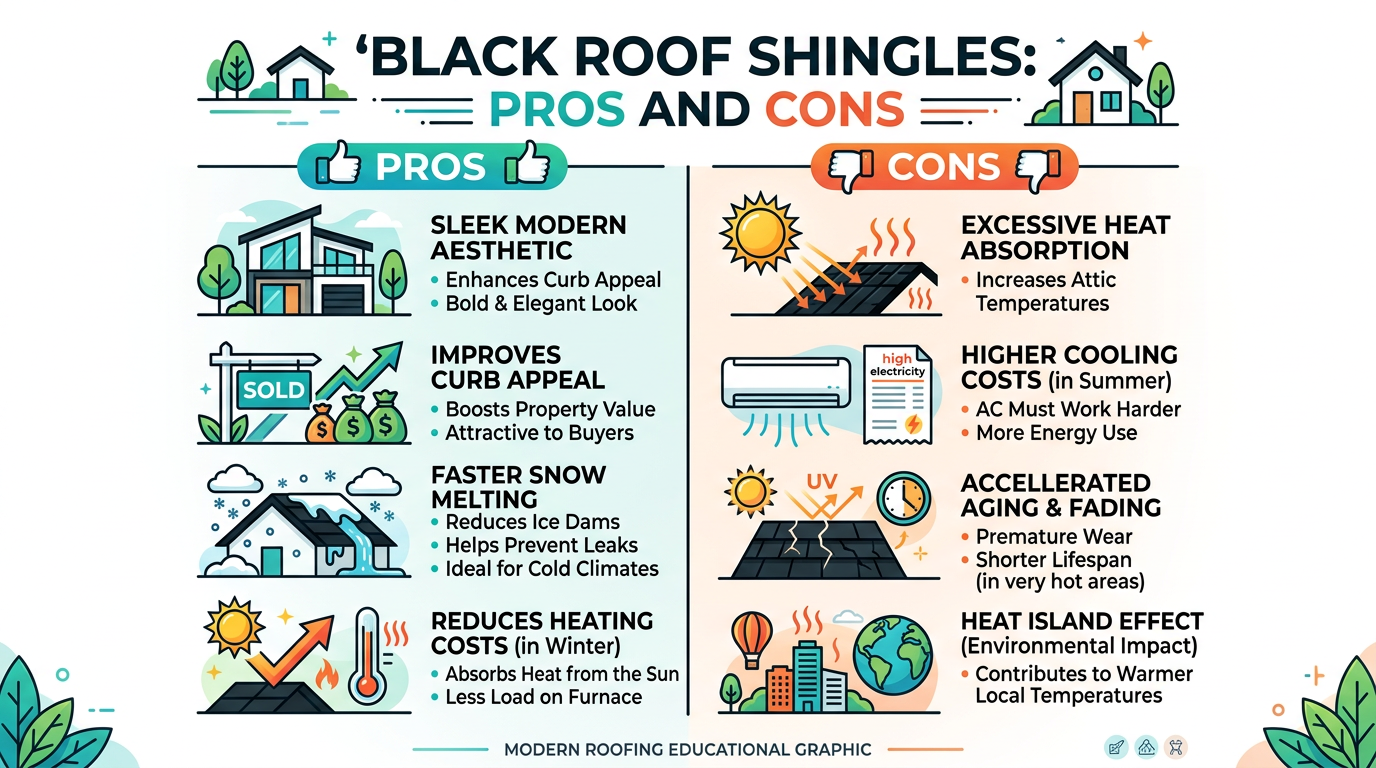
Despite the heat concerns, black shingles remain incredibly popular. Homeowners love the striking appearance that a dark roof provides.
This color creates strong curb appeal that instantly modernizes older homes. A black roof also matches most exterior colors, making it a highly versatile choice.
Whether your siding is white, gray, or brick, dark architectural shingles will complement the design perfectly. Furthermore, dark roofs can help melt snow faster during cold New York winters.
Cons of Black Roof Shingles
The primary disadvantage is the increased heat absorption during the summer months. This excess heat can lead to higher cooling costs if your home is poorly ventilated.
Additionally, severe heat can sometimes accelerate shingle deterioration over the lifespan of the roof. In regions with intense year-round sun, black roofing materials might degrade slightly faster than lighter alternatives.
However, this is less of a concern in areas with distinct seasonal weather changes.
Are Black Shingles a Good Choice in New York?
In Saratoga Springs, NY, the local climate actually makes black shingles a viable option. Our region experiences long, cold winters where a dark roof is highly beneficial.
The solar heat gain helps melt snow and ice dams before they can cause structural damage. While our summers can be warm, the extreme heat is usually short-lived compared to southern states.
Therefore, the benefits of winter snow melt often outweigh the temporary summer cooling costs.
NOTE: Local homeowners must balance summer heat concerns with winter ice protection when selecting a roof color.
How Proper Attic Ventilation Changes Everything
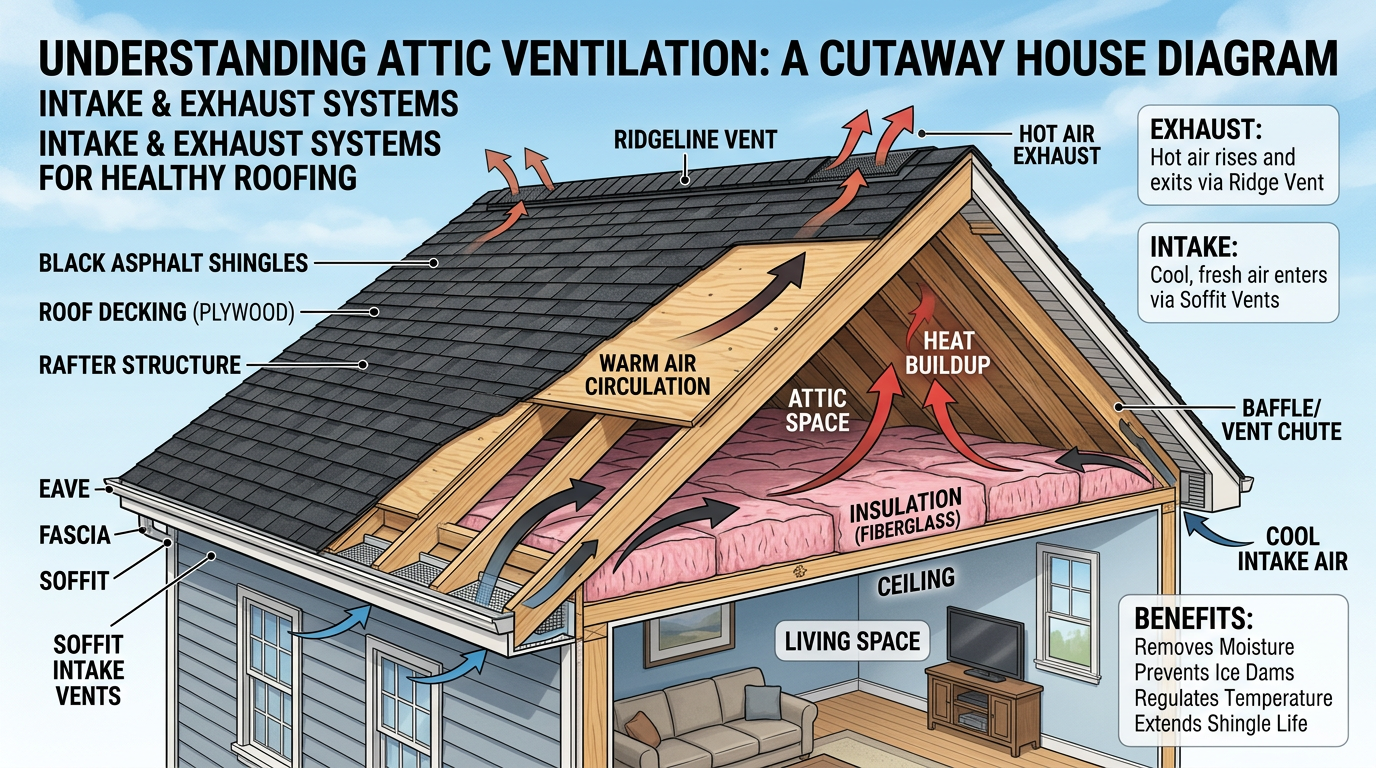
The real secret to making black roof shingles work is effective airflow. Proper attic ventilation allows trapped hot air to escape before it enters your living space.
When your intake and exhaust vents are balanced, the color of your roof matters much less. A well-ventilated system prevents the shingle temperature from prematurely aging the asphalt.
If you are upgrading your home with a skylight installation, ensuring proper ventilation around the unit is also critical. The experienced team at Saratoga Roofing always evaluates your attic’s airflow during any roofing project.
By installing ridge vents and soffit vents, we ensure your dark roof performs perfectly.
What Color Roof Lasts the Longest?
Technically, lighter colored shingles tend to have a slight edge in overall longevity. Colors like light gray or tan reflect damaging UV rays away from the asphalt surface.
This reflection reduces the thermal shock that causes granules to loosen over time.
However, the difference in lifespan between light and dark shingles is often minimal if installed correctly.
High-quality architectural shingles from trusted manufacturers are built to last regardless of their shade. Proper maintenance and routine roof inspections play a much bigger role in longevity than color alone.
NOTE: Choosing a reputable roofing contractor is more important to your roof’s lifespan than picking a specific color.
Making the Final Decision for Your Home
Selecting the right color for your roof is a balance of aesthetics and climate considerations. While black shingles do hold more heat, they offer unmatched style and winter benefits.
By prioritizing attic ventilation, you can enjoy the beautiful look of a dark roof without the drawbacks.
Frequently Asked Questions
Do black shingles make your house hotter?
Yes, black shingles absorb more solar radiation and can make your attic hotter.
However, with proper attic ventilation, this heat is expelled before it significantly affects your interior living space or cooling bills.Are black shingles bad in hot climates?
In extremely hot southern climates, black roofs are generally discouraged because they force air conditioners to work continuously.
In northern climates like Saratoga Springs, they are perfectly fine and even help melt winter snow.Do black shingles fade faster?
All asphalt shingles experience some fading over time due to UV exposure.
While black shingles may show fading slightly more noticeably than lighter colors, modern manufacturing techniques have greatly improved their color retention.Are black shingles more expensive?
No, the color of the shingle typically does not affect the price of the material.
You will pay the same amount for black architectural shingles as you would for gray or brown ones from the same product line.What are the disadvantages of black roof shingles?
The main disadvantages include higher heat absorption and potentially increased summer cooling costs.
There is also a slightly higher risk of thermal fatigue if the attic is not properly ventilated.Are black shingles a good choice in New York?
Yes, black shingles are an excellent choice for New York homes.
They provide stunning curb appeal and their ability to absorb heat helps melt dangerous ice and snow during our harsh local winters.

Oleg Levchenko is a co-founder of Saratoga Roofing Co., a licensed and insured roofing contractor serving Saratoga Springs and the Capital Region for nearly a decade.
Building runs in his family – his grandfather, a farmer and builder, rebuilt his village from the ground up after WWII, and that same resilience and craftsmanship shape how Oleg runs Saratoga Roofing today.
Under his leadership, the company has completed hundreds of roof, siding, and gutter projects across Saratoga, Albany, Rensselaer, and Washington Counties, backed by a leak-proof guarantee and a 4.9-star average rating.