Last Updated on July 10, 2026 by Oleg Levchenko
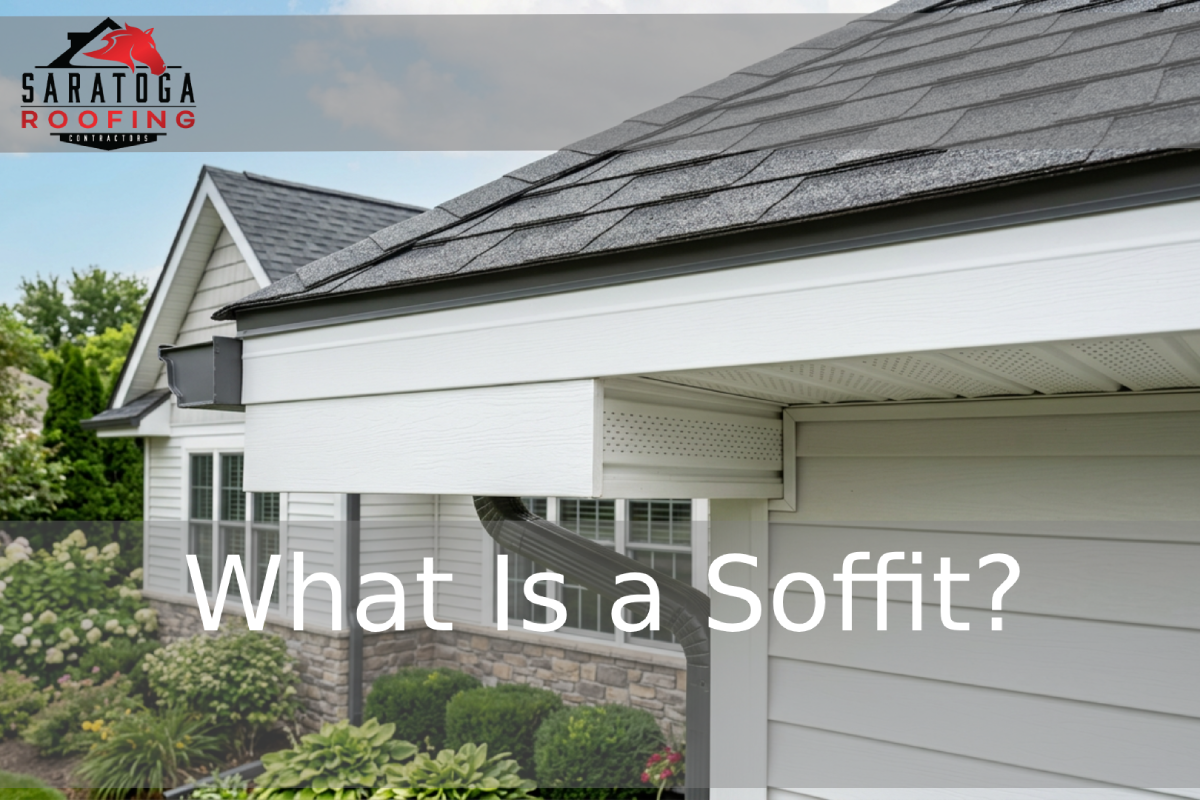
A soffit is the finished surface on the underside of a roof overhang. It protects the rafters from weather and pests, regulates attic ventilation, and gives the roofline a clean, finished appearance. Most soffits are made from vinyl, aluminum, wood, or fiber cement.
Most homeowners walk past their soffits every day without giving them a second thought.
That changes fast once the rot sets in, the wasps move in, or the heating bill spikes for no obvious reason.
The soffit is one of those components that quietly does a lot of heavy lifting for your home. Get it right, and your attic breathes, your rafters stay dry, and your roofline looks sharp.
Let it fail, and you’re looking at moisture damage, pest infestations, and potential structural problems that spread quickly – especially in a climate like Saratoga Springs, NY, where freeze-thaw cycles and heavy snowfall put real stress on roofing systems.
This guide breaks down exactly what a soffit is, what it does, what it’s made of, and how to tell when it needs attention.
What Is a Soffit?
A soffit is the finished panel that covers the underside of a roof overhang – the area between the exterior wall and the outer edge of the roof.
When you stand at the edge of your home and look up, the surface above you is the soffit.
It sits directly beneath the fascia board – the vertical trim that runs along the roof’s edge and supports the gutters.
Together, the soffit and fascia close off the gap between the roof deck and the exterior wall, sealing your roof structure from the outside.
NOTE: Without a properly installed soffit, the rafter tails and roof deck are exposed to wind, rain, ice, and animals – none of which belong inside your roof system.
What Does a Soffit Actually Do?
The soffit handles four distinct jobs simultaneously, and failing at any one of them creates problems that ripple through the rest of the structure.
Attic ventilation is arguably the most critical function.
Vented soffits pull cool outside air into the attic along the eaves, where it travels upward and exits through ridge vents or roof vents at the peak.
This continuous airflow – known as passive ventilation – keeps the attic cool in summer and prevents moisture buildup in winter.
Without it, heat and condensation accumulate, leading to mold, premature shingle deterioration, and in cold climates, ice dams forming along the roofline.
Weather protection is the second job.
The soffit shields the exposed rafter tails from rain, snow, and UV damage.
Rafter tails that are left unprotected absorb moisture, rot out, and eventually compromise the structural integrity of the roof overhang itself.
Pest exclusion comes third.
A properly installed, undamaged soffit blocks entry points for wasps, bats, squirrels, and birds – all of which will happily nest inside an attic if given access.
Finally, the soffit provides an aesthetic finish to the roofline.
It closes off the eave cavity neatly, giving the exterior of your home a clean, intentional look rather than exposed framing.
Soffit vs. Fascia: What’s the Difference?
These two components are almost always discussed together because they work as a system, but they cover different areas.
The soffit runs horizontally, covering the underside of the roof overhang.
The fascia runs vertically along the roof’s outer edge, sitting at the front of the rafter tails and typically holding the gutter system.
A simple way to remember it: the fascia is what you see when you look at the roofline straight on; the soffit is what you see when you look up underneath the overhang.
Both need to be in good condition for your roofline to function correctly.
Common Soffit Materials
- Vinyl is the most widely used soffit material today.
It’s affordable, moisture-resistant, low-maintenance, and holds up well through cold Upstate NY winters without warping or rotting.
Available in vented and solid panels, vinyl is a practical choice for most residential applications. - Aluminum offers similar benefits to vinyl with added durability and fire resistance.
It’s lighter than wood, won’t rot, and handles temperature swings without cracking.
Aluminum soffits are a solid upgrade for homeowners who want longevity without significant added cost. - Wood was the standard for decades and still appears on many older homes in the Saratoga area.
It offers a traditional aesthetic but requires regular painting and sealing.
Left unmaintained, wood soffits absorb moisture and rot – making them the most common type we see in need of replacement. - Fiber cement is the premium option.
It resists moisture, fire, insects, and impact damage.
Fiber cement soffits are more expensive upfront but require minimal maintenance and carry long warranties.
Vented vs. Solid Soffit: Why It Matters for Attic Airflow
Not all soffit panels are the same.
Vented soffits contain small perforations or slots that allow outside air to flow into the attic cavity.
This intake airflow is the foundation of a balanced roof ventilation system.
Solid soffits have no perforations and block airflow entirely.
They’re appropriate in specific situations – certain enclosed eave designs, for example – but should never be used across the full soffit run if your roof relies on passive ventilation.
Signs that your soffit ventilation may be inadequate include:
- Attic temperatures that are significantly higher than outdoor temperatures in summer
- Frost or condensation on attic sheathing during winter months
- Ice dams forming along the lower edge of the roof
- Elevated energy bills without another clear cause
- Mold or mildew growth in the attic
NOTE: The U.S. Department of Energy recommends a minimum of 1 square foot of net free ventilation area per 150 square feet of attic floor space. Blocked or solid soffits are one of the most common reasons homes fall short of this standard.
Signs Your Soffit Needs Repair
Peeling paint or visible rot on wood soffits is usually the first sign of water intrusion.
Once rot sets in, it spreads quickly – especially in climates with heavy seasonal rainfall and snowmelt.
Pest entry points are a serious red flag.
If you notice wasp nests near the roofline, hear scratching or movement in your attic, or spot small gaps and holes in the soffit panels, animals have likely found a way in.
Squirrels and bats can cause significant insulation damage and create health hazards.
Sagging or water-stained panels point to either moisture infiltration from above or condensation buildup from inadequate ventilation.
Either way, the underlying cause needs to be addressed – not just the cosmetic damage.
Ice dams in winter are frequently tied to soffit vent blockage.
When attic heat melts snow on the roof but the soffit vents are covered or clogged, warm air gets trapped.
The meltwater refreezes at the cold eave and forms ice dams that can force water under shingles and cause interior leaks.
NOTE: If you’re dealing with recurring ice dams in Saratoga Springs, blocked soffit ventilation is one of the first things a qualified contractor should inspect.
Soffit Repair and Replacement Costs
Soffit repair and replacement costs depend on the material chosen and the linear footage involved.
General price ranges for soffit replacement by material:
- Vinyl soffit: $3 to $6 per linear foot installed
- Aluminum soffit: $4 to $8 per linear foot installed
- Wood soffit: $6 to $10 per linear foot installed (higher with painting and sealing)
- Fiber cement soffit: $8 to $15 per linear foot installed
A full soffit replacement on an average single-family home typically runs between $1,500 and $5,000 depending on the size of the overhang, material selection, and any underlying repairs needed to the rafter tails or roof deck.
Catching soffit problems early almost always costs less than waiting.
Rotted rafter tails, pest damage to insulation, and moisture intrusion into the wall framing are all significantly more expensive to repair than the soffit itself.
The team at Saratoga Roofing inspects soffits and fascia as part of every roofing assessment – a straightforward step that often catches problems before they escalate.
If your home is due for broader work, combining soffit repairs with roof replacement or skylight installation keeps labor costs down and ensures everything is sealed and integrated correctly.
FAQ
Can a bad soffit cause a roof leak?
Yes – a damaged or missing soffit can allow wind-driven rain, snowmelt, and condensation to reach the rafter tails and roof deck, eventually causing water intrusion into the attic or interior walls.
How do I know if my soffit vents are working?
On a cold day, check your attic for frost or condensation on the sheathing; if present, it typically indicates that cold air is not entering through the soffits and warm moist air is not escaping properly.
Is soffit repair covered by homeowners insurance?
Soffit damage caused by a covered peril – such as a windstorm, hail event, or falling tree – is typically covered, but deterioration from age or lack of maintenance is generally excluded.
What happens if I replace my soffit with solid panels instead of vented panels?
Replacing vented soffits with solid panels blocks the intake airflow your attic depends on, which can lead to heat buildup, moisture damage, mold growth, and accelerated shingle wear.
How long does soffit last before it needs replacing?
Vinyl and aluminum soffits typically last 20 to 40 years with minimal maintenance, while wood soffits may need replacement in 10 to 20 years depending on how well they are painted and sealed.

Oleg Levchenko is a co-founder of Saratoga Roofing Co., a licensed and insured roofing contractor serving Saratoga Springs and the Capital Region for nearly a decade.
Building runs in his family – his grandfather, a farmer and builder, rebuilt his village from the ground up after WWII, and that same resilience and craftsmanship shape how Oleg runs Saratoga Roofing today.
Under his leadership, the company has completed hundreds of roof, siding, and gutter projects across Saratoga, Albany, Rensselaer, and Washington Counties, backed by a leak-proof guarantee and a 4.9-star average rating.