Last Updated on July 10, 2026 by Oleg Levchenko

The right choice depends on your home’s architectural style, trim color, local climate, and HOA guidelines.
White is one of the most forgiving exterior colors a homeowner can choose.
It pairs well with almost any roof color, reflects light beautifully, and gives your home a clean, timeless foundation.
But “almost any color works” is not the same as “every color works equally well.”
The wrong roof color on a white house can flatten the whole exterior, clash with your trim, or even drive up your energy bills.
This guide breaks down the best roof color options for white homes, what to consider before deciding, and how to match your roof to your shutters, landscaping, and architectural style.
Why Roof Color Matters More Than You Think
Most homeowners treat roof color as an afterthought.
That’s a mistake.
How Roof Color Affects Curb Appeal and Resale Value
Your roof covers roughly 40% of your home’s visible exterior surface.
That makes it one of the most visually dominant elements of your home’s facade – not a background detail.
A well-chosen roof color sharpens your home’s curb appeal and can meaningfully increase resale value.
Conversely, a mismatched or faded roof makes the entire exterior look tired, regardless of how fresh the paint is.
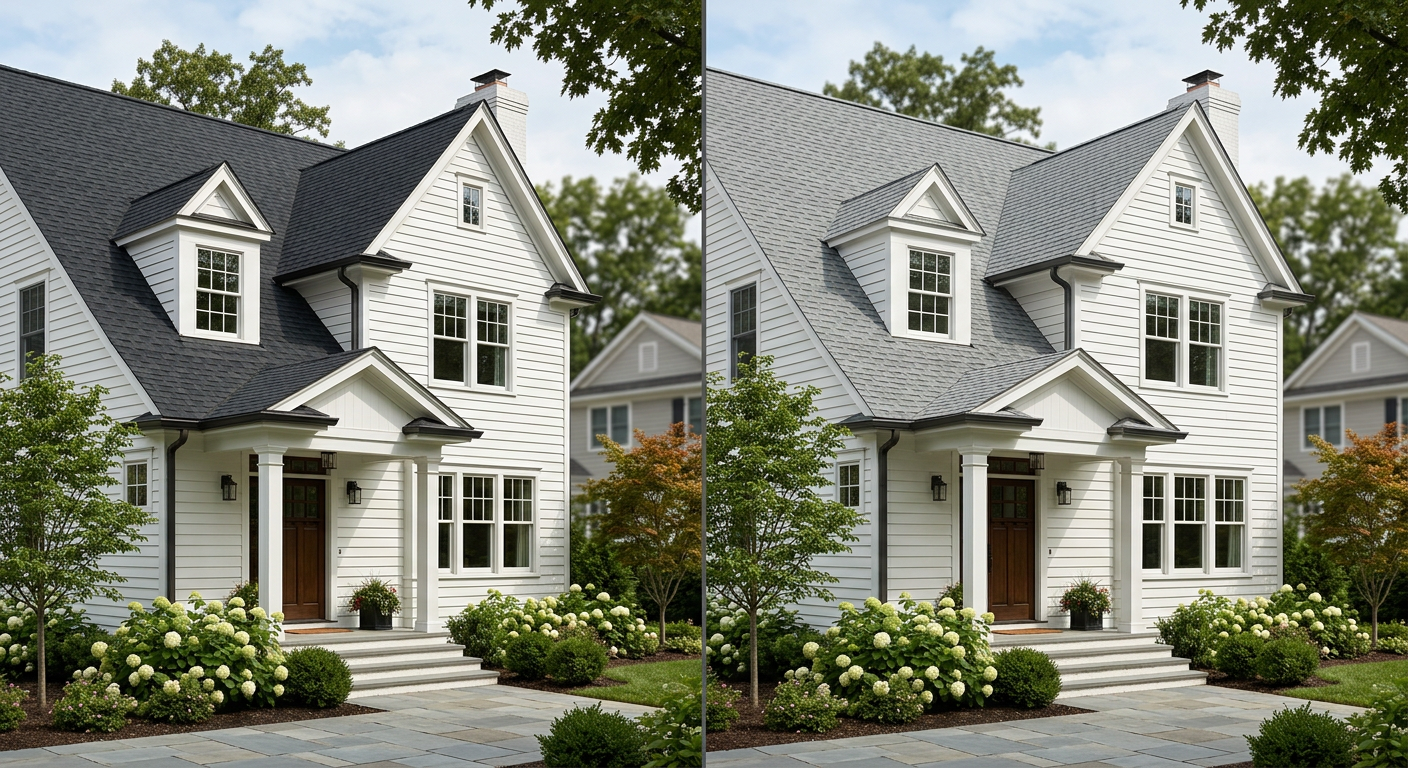
The Energy Efficiency Factor: Light vs. Dark Shingles
Roof color has a measurable impact on interior temperature.
Dark shingles – charcoal, black, deep slate – absorb significantly more solar heat than light-colored alternatives.
In colder climates like Saratoga Springs, NY, where winters are long and heating costs run high, a darker roof can actually help warm a home naturally during the colder months.
In hotter climates, lighter roofs reflect more heat and reduce cooling loads.
NOTE: If energy efficiency is a priority, discuss shingle reflectivity ratings with your roofing contractor before finalizing a color.
HOA and Neighborhood Consistency
Before falling in love with a bold color choice, check your HOA guidelines.
Many communities in the Capital Region and beyond restrict roof colors to approved palettes that maintain neighborhood visual consistency.
Even outside of HOA zones, it’s worth considering what colors your neighboring homes use – a roof that clashes with the surrounding streetscape can actually hurt rather than help resale value.
Top Roof Color Choices for a White House
Charcoal Gray and Black – Classic, High-Contrast Look
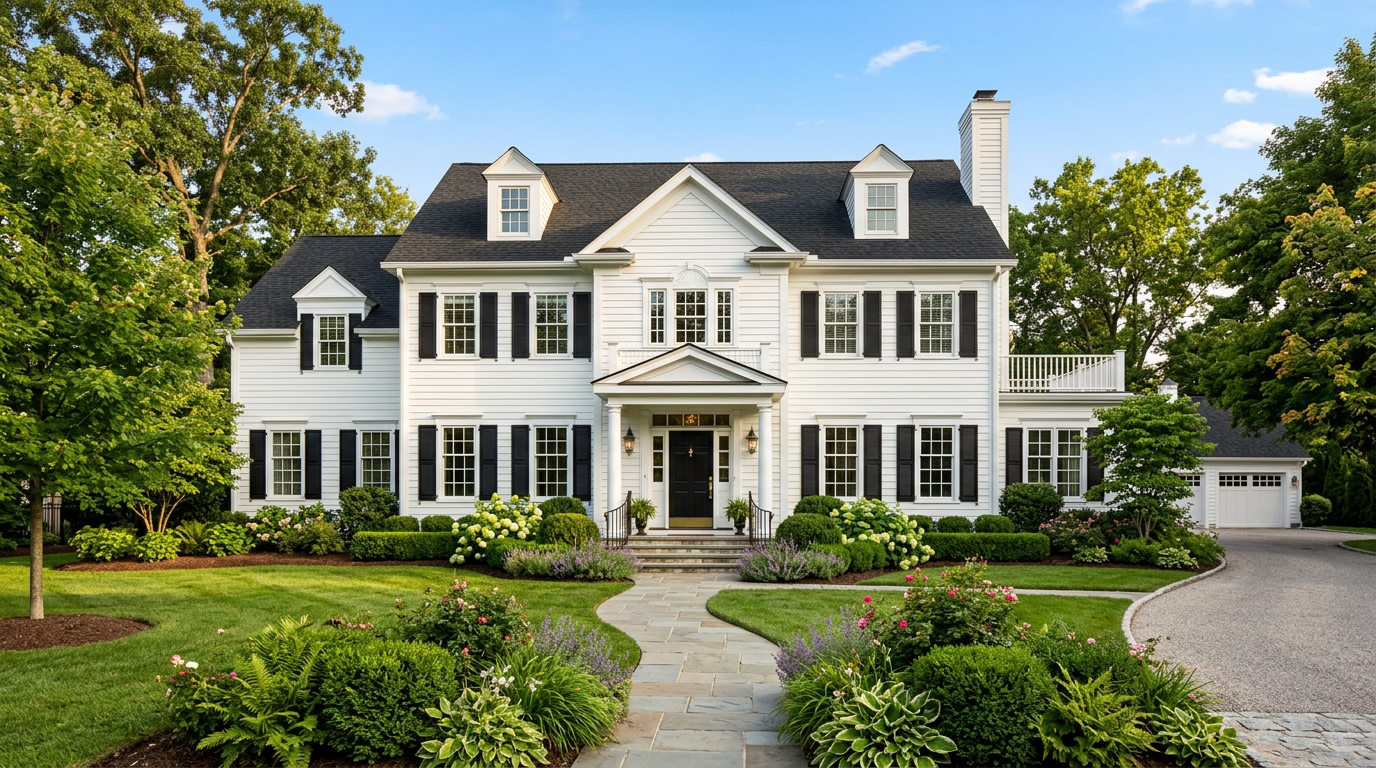
This is the most popular and widely recommended roof color combination for white houses, and for good reason.
Charcoal gray and black shingles create a sharp, high-contrast pairing that reads as clean, sophisticated, and timeless.
It works across virtually every architectural style – colonial, craftsman, farmhouse, or modern.
Popular asphalt shingle options in this range include Owens Corning’s Onyx Black and GAF’s Charcoal, both widely available through certified installers in the Saratoga area.
Slate Blue and Blue-Black – Modern, Coastal-Adjacent Style
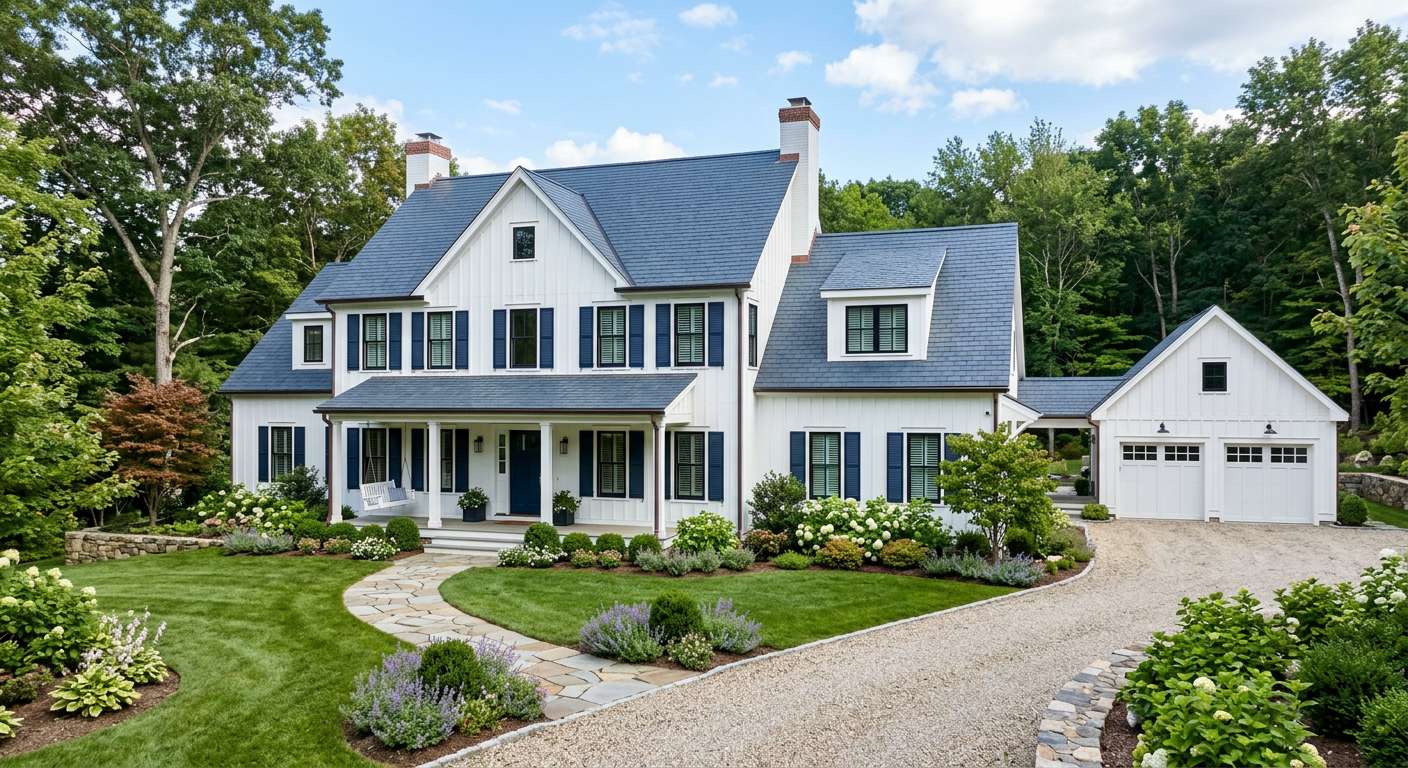
For homeowners looking to move beyond the standard charcoal palette, slate blue and blue-black tones offer a compelling alternative.
These colors pair beautifully with white siding and add a slightly coastal, contemporary edge without looking out of place in upstate New York neighborhoods.
Blue-black shingles in particular offer nearly the same contrast as charcoal while adding a subtle color dimension that can look striking in natural light.
Weathered Wood and Driftwood Tones – Soft, Natural Pairing
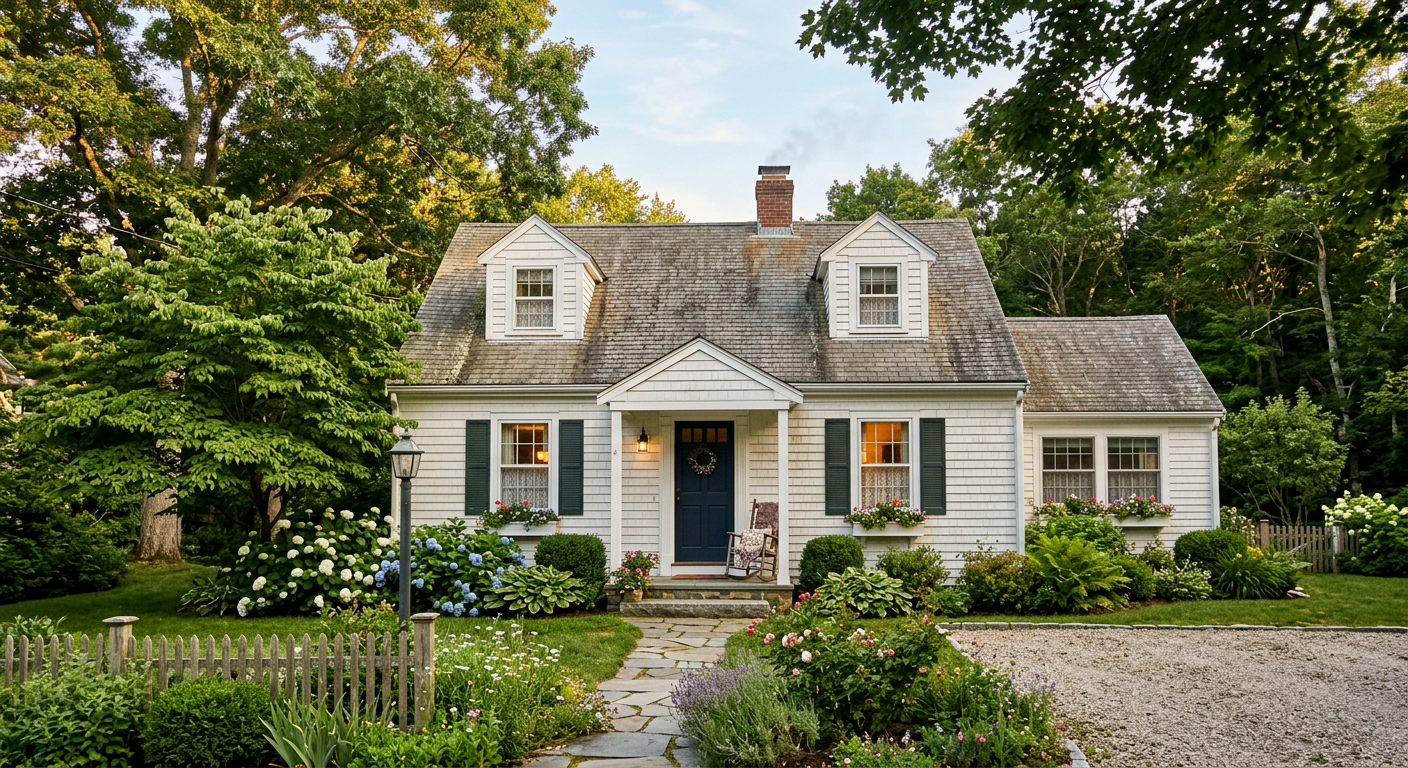
Not every white house needs a high-contrast roof.
Weathered wood and driftwood-toned shingles create a softer, more organic pairing that feels warm rather than sharp.
This combination works especially well for cape cod-style homes, cottages, or any property surrounded by mature trees and natural landscaping.
Owens Corning’s Weathered Wood shingle is one of the most popular asphalt options in this category and has been a staple choice for decades.
Deep Green and Forest Tones – Traditional, Blends with Landscaping
Deep green roofing is an underutilized but highly effective choice for white homes in wooded or semi-rural settings.
Forest green tones echo surrounding vegetation and give the home a grounded, traditional character.
This pairing is particularly strong on colonial or cape cod-style homes with shutters in black, hunter green, or navy.
Matching Roof Color to Trim, Shutters, and Landscaping
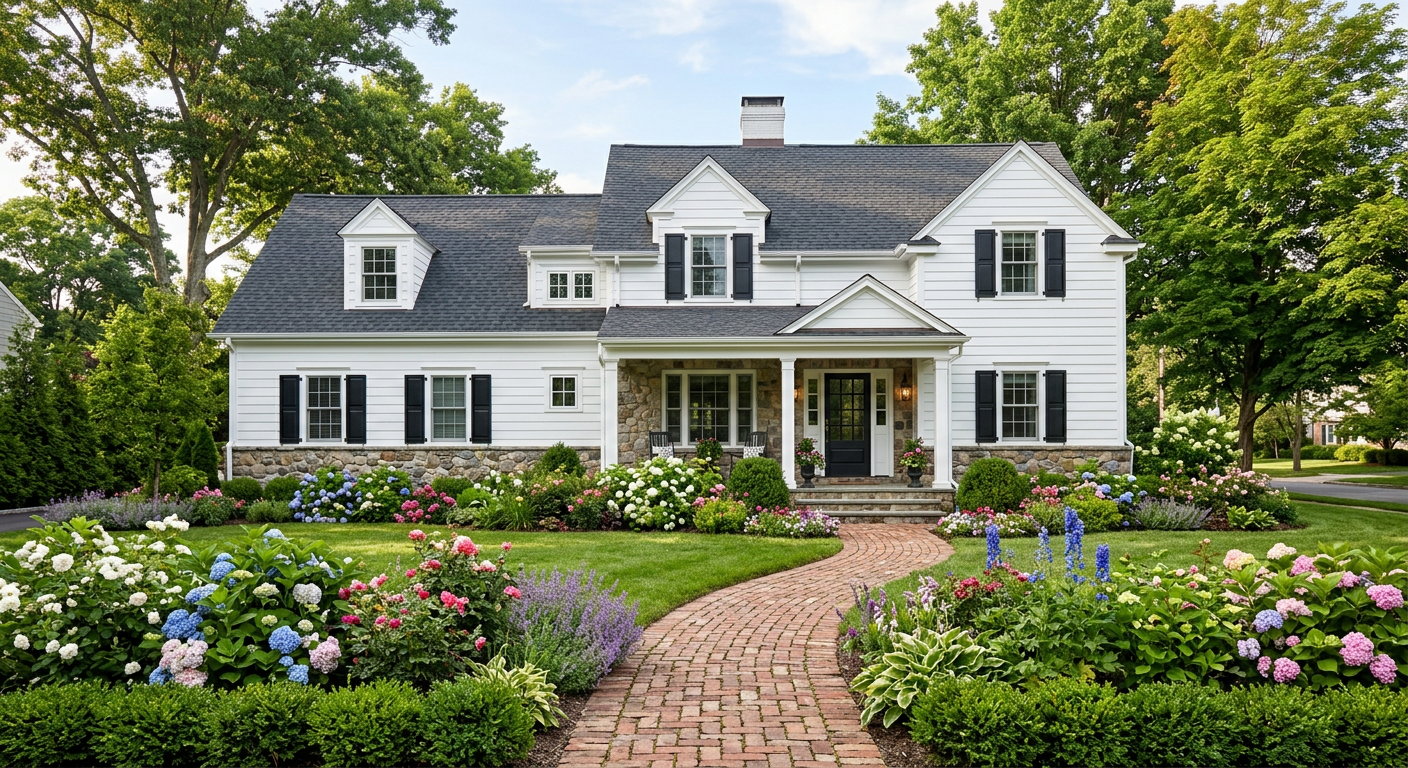
Roof color doesn’t exist in isolation.
It needs to work alongside your trim, shutters, driveway material, and landscaping.
Coordinating with Black or Navy Shutters
Black and navy shutters are among the most common choices for white homes, and both pair well with the roof colors listed above.
Black shutters against a white house with a charcoal roof creates a cohesive, high-contrast exterior with strong visual structure.
Navy shutters work particularly well with slate blue or blue-black roofing, tying the color story together without matching too precisely.
Brick Walkways and Stone Accent Considerations
If your home features a brick walkway, stone foundation, or chimney accents, factor those warm tones into your decision.
Red or tan brick can clash with cool blue-black roofing but pairs naturally with weathered wood or charcoal tones.
Bluestone or gray granite accents, common in many Saratoga Springs homes, complement slate blue and charcoal roofing particularly well.
Architectural Style Considerations
Which Roof Tones Work for Colonial, Farmhouse, and Modern Homes?
Colonial homes benefit from traditional, high-contrast roof colors – charcoal, black, or deep green work best.
These colors reinforce the formal symmetry and classic proportions that define colonial architecture.
Farmhouse-style homes suit softer tones more naturally – weathered wood, driftwood, and muted grays complement the relaxed, rustic character of this style.
Modern and contemporary homes open up more options, including blue-black and even darker charcoal tones with clean lines and minimal trim detailing.
NOTE: Matching your roof color to your architectural style isn’t just about aesthetics – it protects long-term resale value by keeping the home consistent with buyer expectations for that style.
Metal vs. Asphalt: Does Material Change the Color Options?
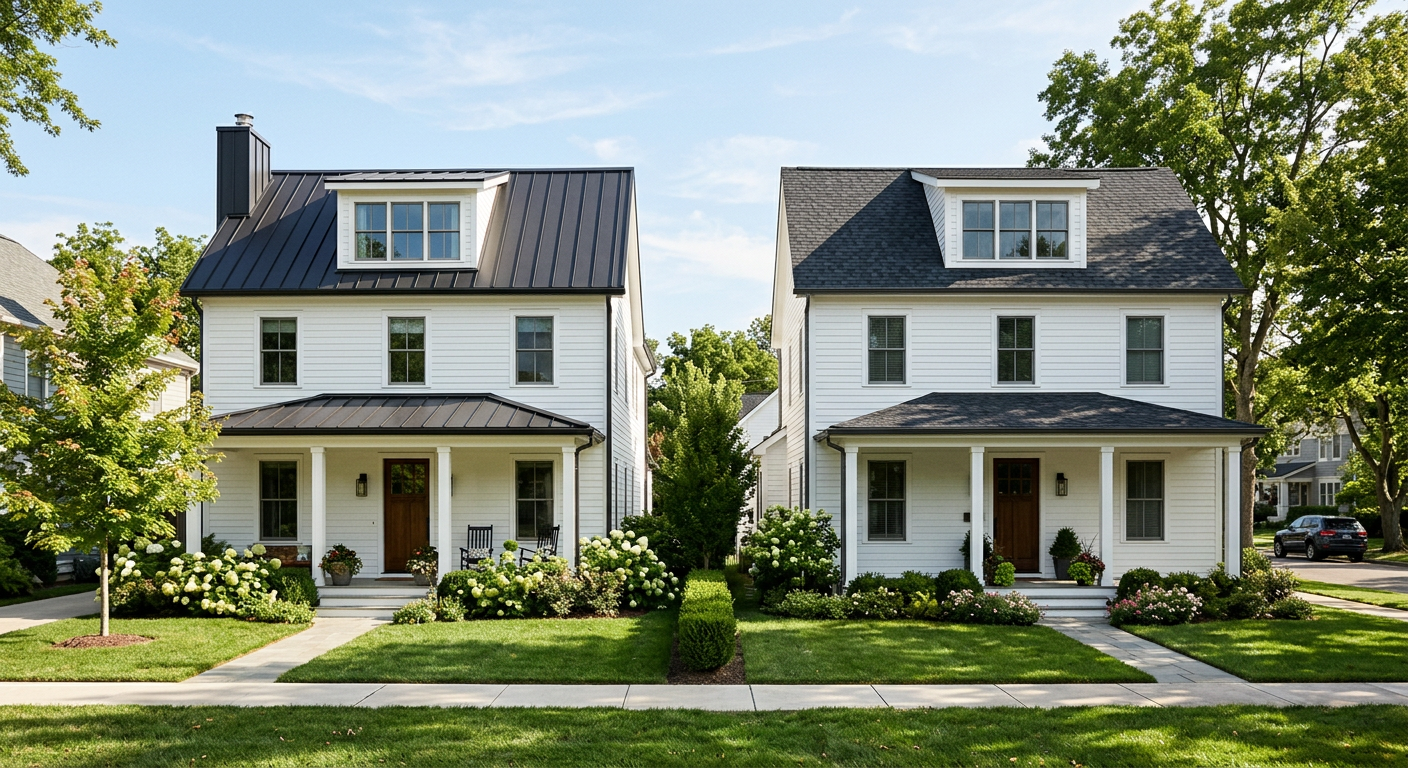
Yes – significantly.
Wider Color Range with Metal Roofing
Metal roofing offers a dramatically broader color palette than asphalt shingles.
Powder-coated standing seam metal panels are available in hundreds of custom colors, including deep burgundy, slate gray, bronze, and matte black.
For white homes aiming for a modern or upscale look, a matte charcoal or slate metal roof can be a striking, long-lasting choice.
Metal roofs also carry longer lifespans – typically 40 to 70 years compared to 20 to 30 years for asphalt – which makes the higher upfront cost a reasonable long-term investment.
Popular Asphalt Shingle Color Lines
For most homeowners, asphalt shingles remain the most cost-effective option, and the color selection has improved considerably in recent years.
Well-regarded color lines for white houses include:
- Owens Corning Duration Series – available in Charcoal, Onyx Black, and Weathered Wood
- GAF Timberline HDZ – available in Charcoal, Slate, and Pewter Gray
- Atlas Pinnacle Pristine – available in multiple gray and blue-tone options
At Saratoga Roofing, the team is Owens Corning-trained and Atlas Pro Diamond Select certified, which means homeowners in the Capital Region can access full manufacturer warranties on installed shingles – a meaningful advantage when selecting premium color lines.
If you’re planning a full roof replacement, color selection is best finalized during the estimate phase so your contractor can source specific shingle lines.
And if you’re updating your exterior more broadly, skylight installation is worth considering at the same time – adding natural light can complement a darker roof by brightening interior spaces that would otherwise feel dim.
Making the Right Call for Your Home
Choosing the best roof color for a white house comes down to four variables: architectural style, trim and shutter colors, surrounding landscape, and local climate.
For most white homes, charcoal gray or black offers the safest, most universally effective choice.
For homeowners who want something with more personality, slate blue, weathered wood, or deep green all deliver strong results when matched thoughtfully to the rest of the exterior.
Take the time to view shingle color samples against your actual siding – not just on a computer screen.
Colors read differently in natural light than they do in a showroom or on a website, and making that comparison before committing can save a costly mistake.
Frequently Asked Questions
Does a dark roof make a white house look bigger or smaller?
A dark roof on a white house tends to visually anchor the structure, making it feel grounded and proportioned rather than larger or smaller – though very steep, dark rooflines can emphasize height and make a home appear taller.
What is the most popular roof color for white houses?
Charcoal gray is consistently the most popular roof color choice for white homes, offering high contrast, broad versatility across architectural styles, and strong curb appeal that holds up over time.
Should roof color match or contrast with the house?
Contrast generally produces stronger curb appeal than matching, which is why dark roofs on white homes are so widely recommended – though soft, tonal pairings like weathered wood on white can work well for certain architectural styles where a warmer, more understated look is the goal.
How do I know if my HOA approves a specific roof color?
Review your HOA’s CC&Rs (Covenants, Conditions, and Restrictions) document, which typically includes an approved materials and color list – most HOAs require written approval before any exterior change, including roof replacement.
Does roof color affect home resale value?
Yes – a well-chosen roof color that complements your home’s exterior and fits neighborhood norms can positively influence buyer perception and appraisal value, while a mismatched or outdated color can work against you during a sale.

Oleg Levchenko is a co-founder of Saratoga Roofing Co., a licensed and insured roofing contractor serving Saratoga Springs and the Capital Region for nearly a decade.
Building runs in his family – his grandfather, a farmer and builder, rebuilt his village from the ground up after WWII, and that same resilience and craftsmanship shape how Oleg runs Saratoga Roofing today.
Under his leadership, the company has completed hundreds of roof, siding, and gutter projects across Saratoga, Albany, Rensselaer, and Washington Counties, backed by a leak-proof guarantee and a 4.9-star average rating.