Last Updated on June 8, 2026 by Oleg Levchenko
Quick answer: Sometimes.
It depends on the roof’s slope, condition, weather, and roofing material.
While careful steps might not cause immediate harm, walking on a compromised surface can lead to severe structural damage or dangerous falls.
If you are looking for roof hail damage signs, it is always safer to hire a professional instead of climbing up there yourself.
Is It Safe to Walk on a Roof?
Homeowners often wonder about roof safety when they need to clear debris or check for leaks.
The reality is that stepping onto your home’s exterior covering is inherently risky for both you and the materials beneath your feet.
An asphalt shingle system is designed to withstand harsh weather, but it is not engineered to support concentrated human weight.
Walking across a steep incline without proper safety gear drastically increases your chances of slipping.
NOTE: Always wear soft-soled shoes like rubber sneakers to maximize traction and minimize the risk of surface abrasion.
When You Should Never Walk on a Roof
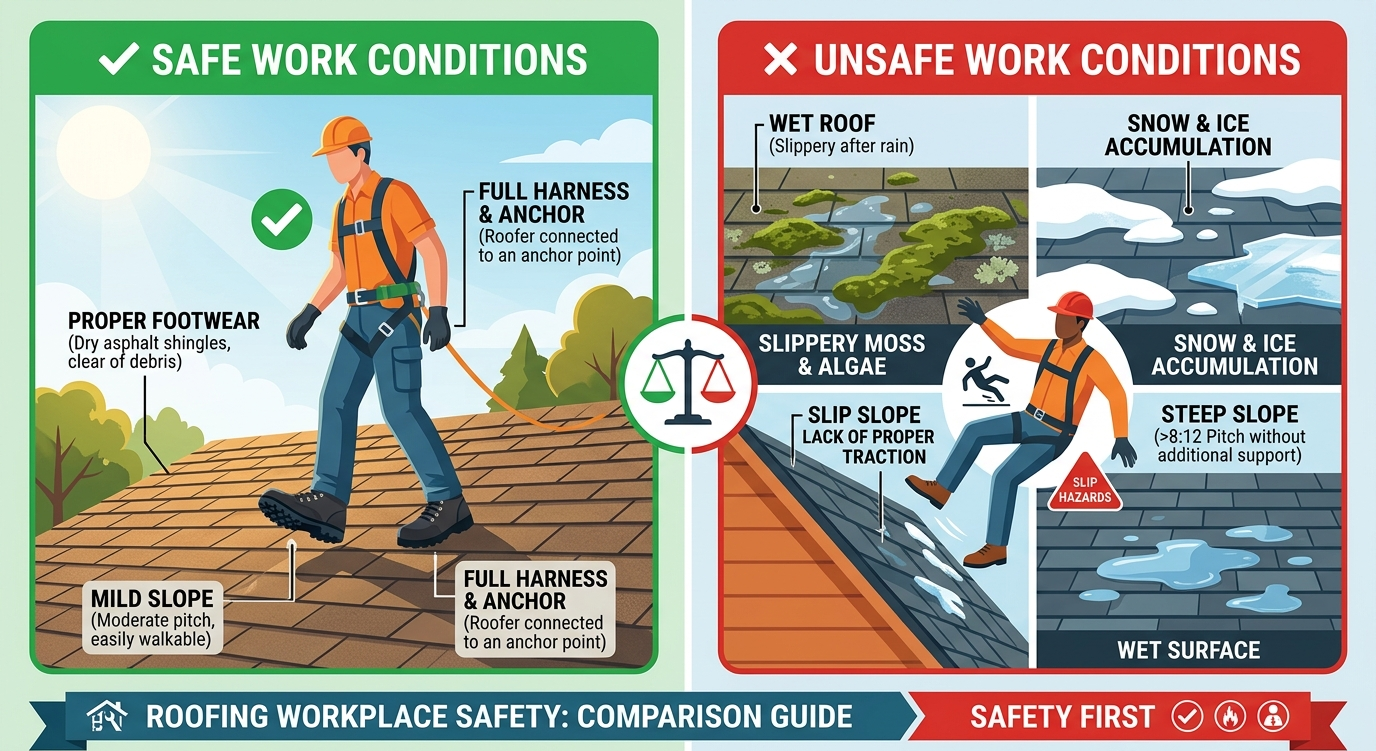
Certain conditions make traversing your roof an absolute hazard.
You should completely avoid stepping on the surface immediately after a rainstorm, as moisture creates a dangerously slick environment.
Early mornings also present high risks due to invisible morning dew or frost accumulation.
If you suspect structural weakness or if the pitch is particularly steep, you must stay on the ground.
Attempting a DIY assessment is never worth risking a severe injury or causing a total roof collapse.
Can Walking Damage Asphalt Shingles?
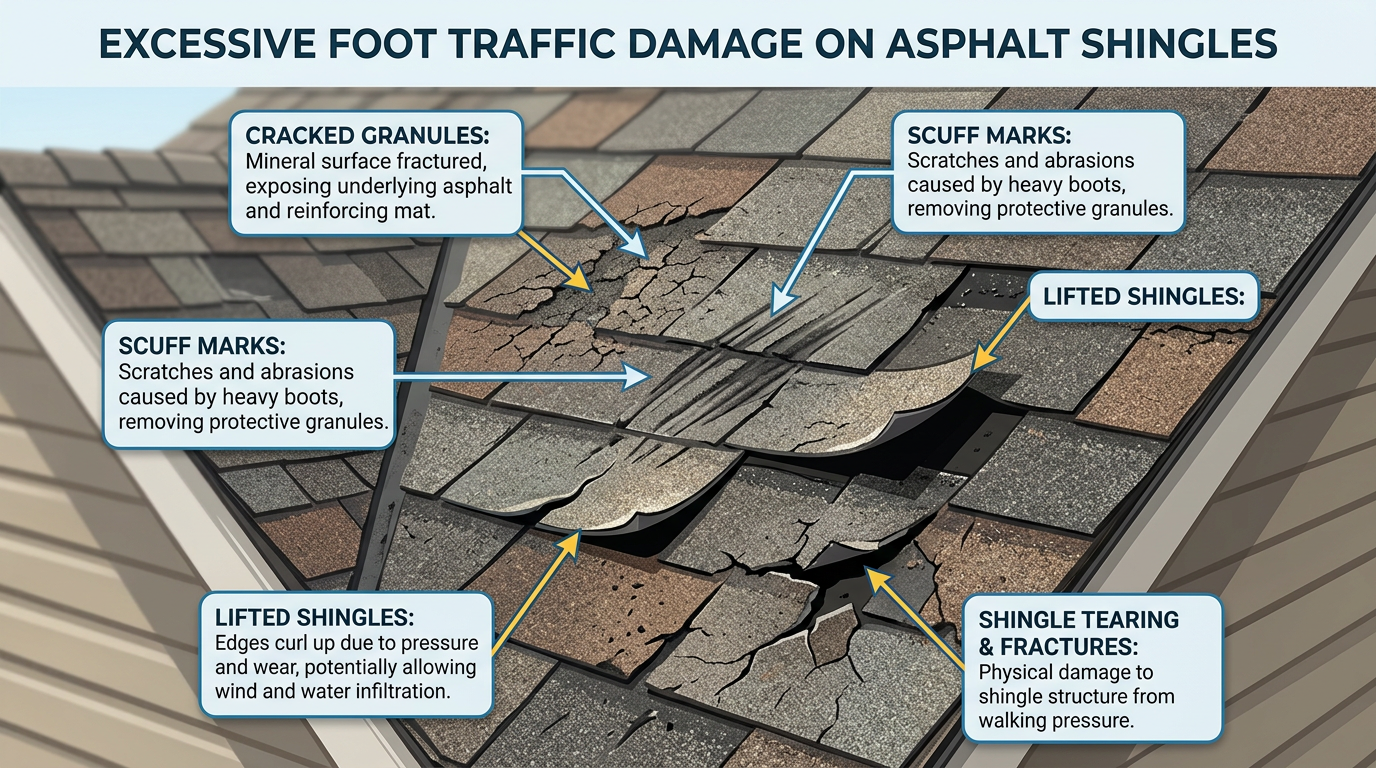
Your foot traffic can easily dislodge the protective mineral granules embedded in the shingles.
These granules are vital because they shield the underlying asphalt from degrading UV rays.
When you scuff the surface, you leave the material vulnerable to premature aging and active leaks.
This is especially true if you are already dealing with hail damage shingles that have been weakened by recent storms.
Foot pressure can turn minor surface cracks into significant fractures requiring immediate hail damage roof repair.
The Timeline of Damage: Why is hail damage bad for a roof?
Many homeowners ask why is hail damage bad for a roof if it just looks like a few small dents.
Month 1: The initial hailstone impact creates invisible micro-fractures in the shingle’s fiberglass mat.
Month 3: The protective granule loss accelerates, leaving the asphalt exposed to the harsh summer sun in Saratoga Springs, NY.
Month 6: UV rays bake the exposed asphalt, causing the material to become brittle and crack.
Month 12: Water infiltrates these cracks during winter freezes, expanding the gaps and causing active interior leaks.
If left unchecked, this progression turns a simple repair into a mandatory roof replacement.
How Roofers Walk on Roofs Safely
Professional contractors undergo extensive safety training to navigate high elevations without causing harm.
They use specialized equipment such as roof jacks, sturdy safety harnesses, and heavy-duty ridge hooks.
Experts know exactly where to place their feet, stepping primarily on the overlapping sections where the structural support is strongest.
When they perform a hail storm roof inspection, they tread lightly to preserve the integrity of the materials.
They also know how to distribute their weight evenly to prevent localized decking compression.
What Type of Roof Is Safe to Walk On?
No residential roof is completely safe for casual strolls, but some materials tolerate foot traffic better than others.
A flat or low-slope membrane roof can handle occasional walking, provided you wear the correct footwear.
Heavy-duty metal roofing panels are durable, but they become incredibly slippery with the slightest bit of moisture.
Fragile materials like clay tiles, slate, or wood shakes will almost certainly crack under the weight of a person.
NOTE: If you have a clay tile roof, do not attempt to walk on it under any circumstances, as the tiles are extremely brittle.
When to Call a Professional Instead
Your safety should always be the primary concern when dealing with elevated home maintenance.
Instead of risking a dangerous fall or worsening existing deterioration, trust an experienced local contractor to handle the evaluation.
The experts at Saratoga Roofing have the tools and training to assess your property accurately.
We can identify hidden problems and help you navigate the complex insurance claim hail damage roof process.
Whether you need a simple patch or a complex skylight installation, our certified team is ready to protect your home.
FAQ
Is it safe to walk on an asphalt shingle roof?
It is generally not recommended to walk on an asphalt shingle roof.
Foot traffic can loosen the protective granules and break the fiberglass matting.
If you must go up, wear soft rubber-soled shoes and step carefully on the overlapping sections.
Can walking on a roof damage shingles?
Yes, applying concentrated weight can easily damage the roofing materials.
The pressure from your shoes can cause immediate shingle cracking or severe granule loss.
This accelerates the aging process and leaves the roof vulnerable to water infiltration.
What is the safest way to inspect a roof?
The safest way to perform a visual check is from the ground using a pair of binoculars.
You can also use a sturdy ladder positioned securely against the eaves to look across the surface.
For a comprehensive evaluation, always hire a licensed roofing contractor to perform the inspection.
Can I walk on my roof after rain?
You should never walk on your roof after it has rained.
Wet shingles and metal panels act like ice rinks, drastically increasing your risk of a fatal fall.
Always wait until the surface is completely dry and free of any moisture buildup.
How steep is too steep to walk on?
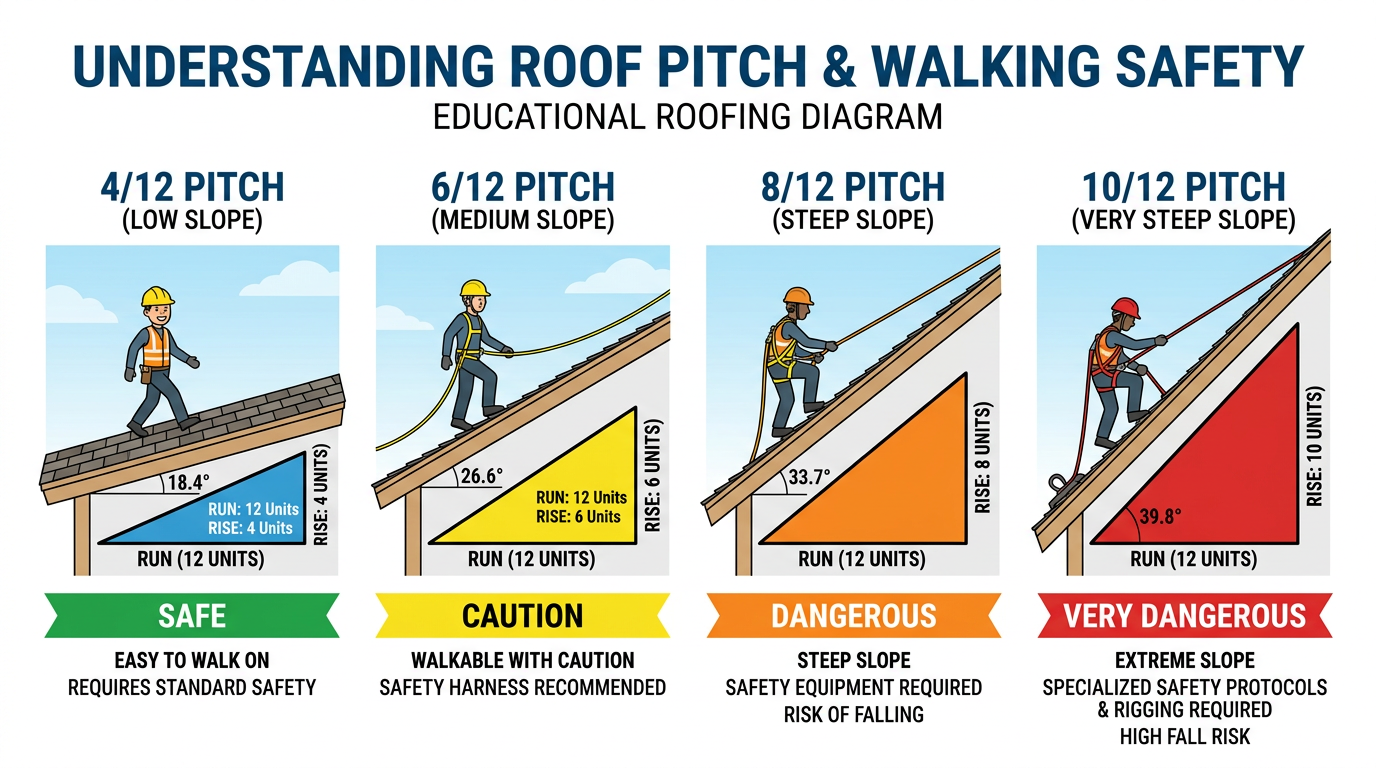
Any roof with a pitch greater than 4/12 (a 4-inch rise for every 12 inches of run) is considered dangerous for untrained individuals.
Steep slopes require professional fall protection equipment to navigate safely.
If you feel unstable or have to crawl to maintain your balance, it is too steep.

Oleg Levchenko is a co-founder of Saratoga Roofing Co., a licensed and insured roofing contractor serving Saratoga Springs and the Capital Region for nearly a decade.
Building runs in his family – his grandfather, a farmer and builder, rebuilt his village from the ground up after WWII, and that same resilience and craftsmanship shape how Oleg runs Saratoga Roofing today.
Under his leadership, the company has completed hundreds of roof, siding, and gutter projects across Saratoga, Albany, Rensselaer, and Washington Counties, backed by a leak-proof guarantee and a 4.9-star average rating.