Last Updated on September 8, 2026 by Oleg Levchenko
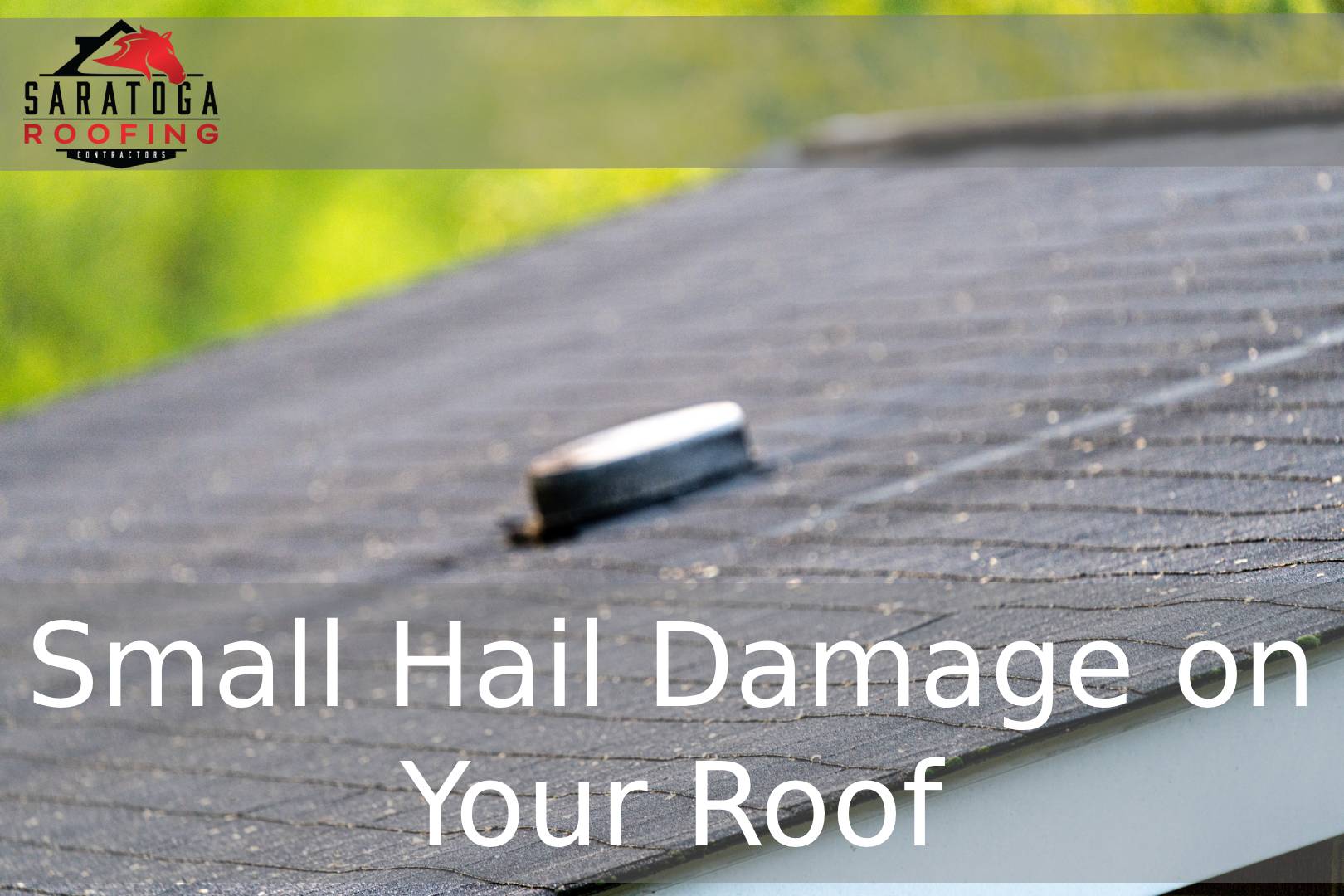
Small hail damage often looks like minor bruising, granule loss, or small dents rather than obvious holes or cracks, which makes it easy to miss during a quick glance from the ground.
Whether it’s worth repairing or filing an insurance claim depends on your roofing material, the hailstone size, and your roof’s age.
Older or thinner materials can suffer damage from hail as small as one inch in diameter, while a HAAG-certified inspection is the most reliable way to confirm functional versus cosmetic damage before deciding on repairs or a claim.
Saratoga Springs and the surrounding Upstate New York region see their fair share of spring and summer hailstorms, and homeowners are often left wondering whether the marks on their roof are worth worrying about.
Unlike catastrophic hail events that leave shingles shredded and gutters dented beyond recognition, small hail damage tends to be subtle, and subtlety is exactly what makes it dangerous.
This article focuses on a specific question: is minor hail damage worth repairing or claiming, not just what hail damage generally looks like.
If you’re looking for a broader explanation of the mechanics behind hail damage, how hail damages a roof covers that ground in more detail.
Here, we’ll walk through what small hail damage actually looks like, whether hailstone size really matters, and what steps protect both your roof and your insurance claim.
What Small Hail Damage Actually Looks Like
Small hail damage rarely announces itself the way a cracked window or a fallen tree limb does.
Instead, it shows up as subtle changes in texture and material integrity that are easy to overlook from a ladder or the driveway.
Asphalt Shingles: Bruising and Granule Loss
On asphalt shingles, small hail damage typically appears as soft, bruised spots where the impact fractured the shingle mat without fully puncturing it.
You may also notice granule loss, which exposes the black asphalt layer underneath and accelerates UV damage over time.
If you’re seeing bald patches or dark spots scattered across your shingles, granule loss is likely already underway.
Metal Roofing: Dents
Metal roofing responds to hail differently than shingles, generally showing dents rather than cracks or tears.
According to Haag Engineering Co.’s impact testing (Marshall et al.), metal roofing wasn’t included in their threshold study, so no specific damage-size number exists for it.
That said, field experience shows metal is generally more resistant to functional damage from hail, even though cosmetic denting is common.
Flat and Membrane Roofs: Soft Spots
On flat or membrane roofing systems, small hail damage often presents as soft spots or subtle depressions where the membrane has been compressed or bruised.
These soft spots can be difficult to spot visually and often require a hands-on inspection to confirm.
Does Hailstone Size Matter?
Yes, hailstone size is one of the biggest factors in determining whether your roof actually sustained damage.
Haag Engineering Co.’s hail impact study tested common roofing materials against ice stones of varying diameters to identify the size needed to cause real damage (Marshall, Herzog, Morrison & Smith, AMS).
The table below reflects their field observation thresholds for aged roofing materials.
|
Roofing Material |
Hailstone Size Needed to Cause Damage |
|---|---|
|
Aged 3-tab asphalt shingles |
~1.00 inch |
|
Aged laminated/architectural shingles (11 years) |
~1.25 inches |
|
Cedar shingles |
~1.25 inches |
|
Cedar shakes |
~1.50 inches |
|
Fiber-cement tiles |
~1.50 inches |
|
Concrete tile |
~1.75 inches |
|
Built-up gravel roofing |
~2.50 inches |
NOTE: Metal roofing has no established threshold size in this research, so damage should be assessed qualitatively rather than by a fixed diameter.
These figures come from controlled ice-stone impact tests cross-checked against real-world hailstorm surveys, so they represent a reasonably reliable benchmark rather than a guess.
Is Minor Hail Damage Worth Repairing or Filing a Claim For?
This is the real question most homeowners are asking, and the honest answer is: it depends on your roof’s age and material.
Choose repair or a claim if your roofing material is older, thinner, or already near the end of its expected lifespan, since even sub-threshold hail can accelerate failure.
Skip the claim if your roof is newer, made from a more impact-resistant material, and the hail that fell was clearly below the damage threshold for your specific roofing type.
An Owens Corning or Atlas Pro Diamond Select shingle system, for example, tends to hold up better against minor hail events than older three-tab shingles nearing 10+ years of age.
The safest way to make this call isn’t guesswork, it’s a professional inspection, which we’ll cover shortly.
Why a DIY ‘Quick Fix’ Can Cost You More
It’s tempting to grab a tube of roofing cement and patch a small dent or bruise yourself, but this approach carries real risk.
- Warranty risk is the first concern, since many manufacturer warranties become void if unauthorized repairs are made to the roofing system.
- Insurance risk is the second concern, since a DIY patch can complicate or even disqualify a future claim if an adjuster determines the damage was altered before assessment.
In short, a quick fix might hide the problem temporarily while creating two much bigger problems: a voided warranty and a denied claim.
Why Small Damage Gets Worse If Ignored
Small hail damage doesn’t stay small, because bruised or fractured shingle mats create weak points that water eventually exploits.
Once water finds a path through a bruised shingle or a dented membrane seam, it doesn’t just sit there, it travels along the roof deck until it finds a way into your attic or ceiling.
This is why minor cosmetic damage today can turn into a full leak, insulation damage, or even mold growth a year or two down the line.
How a HAAG-Certified Inspection Differs From a DIY Look
A homeowner walking the roof with a flashlight is looking for obvious problems, but a HAAG-certified inspection is trained to identify the difference between cosmetic and functional damage that isn’t visible at a glance.
HAAG Engineering’s own testing methodology, the same research behind the hailstone threshold table above, is the industry standard that HAAG-certified inspectors are trained to apply in the field.
That level of training matters because insurance adjusters take HAAG-certified assessments seriously, which can make or break a claim’s outcome.
If you’re unsure whether recent hail affected your roof, a HAAG-certified roof inspection is the most reliable way to get a clear answer before you decide on repairs or a claim.
Insurance Claim Window & Documentation Tips for NY Homeowners
New York doesn’t have one single statutory deadline that governs every hail damage claim, so it’s important not to assume a fixed timeline.
Most NY homeowner policies require notice within 12–24 months of the storm, but your policy is the deciding document, so check it directly or call your agent to confirm your specific window.
Documentation tips that strengthen any claim include photographing damage immediately after a storm, keeping receipts for any temporary protective measures, and requesting a written inspection report from a certified professional.
The more thorough your documentation, the stronger your position if your insurer questions the extent or cause of the damage.
Repair Cost for Minor Hail Damage
Repair costs for minor hail damage vary depending on the extent of granule loss, the number of affected shingles, and whether flashing or membrane repairs are also needed.
Spot repairs for a handful of bruised or dented shingles are typically far less expensive than a full roof replacement, which is part of why an early inspection matters.
Catching the damage while it’s still classified as minor keeps your options, and your budget, more manageable.
Making the Right Call on Small Hail Damage
Small hail damage is easy to dismiss because it doesn’t look dramatic, but that’s precisely why it deserves a closer look rather than a passing glance.
Understanding your roofing material’s damage threshold, avoiding DIY patch jobs, and getting a HAAG-certified inspection are the three steps that put you in the best position to make an informed repair or claim decision.
If you’re in the Saratoga Springs area and noticed hail recently, scheduling a professional inspection now is the simplest way to protect both your roof and your insurance options.
FAQ
Can small hail damage a roof?
Yes, small hail can damage a roof, particularly if the roofing material is aged, thin, or already weathered, since even hailstones around one inch in diameter can bruise older asphalt shingles.
What does minor hail damage look like on a roof?
Minor hail damage typically appears as small bruises or soft spots on shingles, patches of granule loss exposing the underlying asphalt, light denting on metal roofing, or subtle soft spots on flat and membrane roofs.
Is it worth claiming hail damage on insurance?
It’s often worth claiming if your roof is older or made from a more brittle material, since minor damage can worsen over time, but a HAAG-certified inspection is the best way to confirm whether the damage meets a functional threshold before filing.
Will 0.75-inch hail damage a roof?
Usually not, since 0.75-inch hail falls below the damage threshold for most roofing materials, but older or more brittle roofing systems can be an exception worth having checked.
How long do I have to file a hail damage claim in NY?
There’s no single fixed state deadline for hail damage claims in New York, but most homeowner policies require notice within 12–24 months of the storm, so your specific policy is the document that determines your window.
Does small hail damage void a roof warranty?
Small hail damage itself typically doesn’t void a warranty, but unauthorized DIY repairs made in response to that damage often do, which is why professional repair is recommended.
What’s the difference between cosmetic and functional hail damage?
Cosmetic damage affects a roof’s appearance without compromising its ability to shed water, while functional damage reduces water-shedding capability or shortens the roof’s expected lifespan, a distinction that a HAAG-certified inspection is specifically trained to identify.

Oleg Levchenko is a co-founder of Saratoga Roofing Co., a licensed and insured roofing contractor serving Saratoga Springs and the Capital Region for nearly a decade.
Building runs in his family – his grandfather, a farmer and builder, rebuilt his village from the ground up after WWII, and that same resilience and craftsmanship shape how Oleg runs Saratoga Roofing today.
Under his leadership, the company has completed hundreds of roof, siding, and gutter projects across Saratoga, Albany, Rensselaer, and Washington Counties, backed by a leak-proof guarantee and a 4.9-star average rating.