Last Updated on May 7, 2026 by Oleg Levchenko
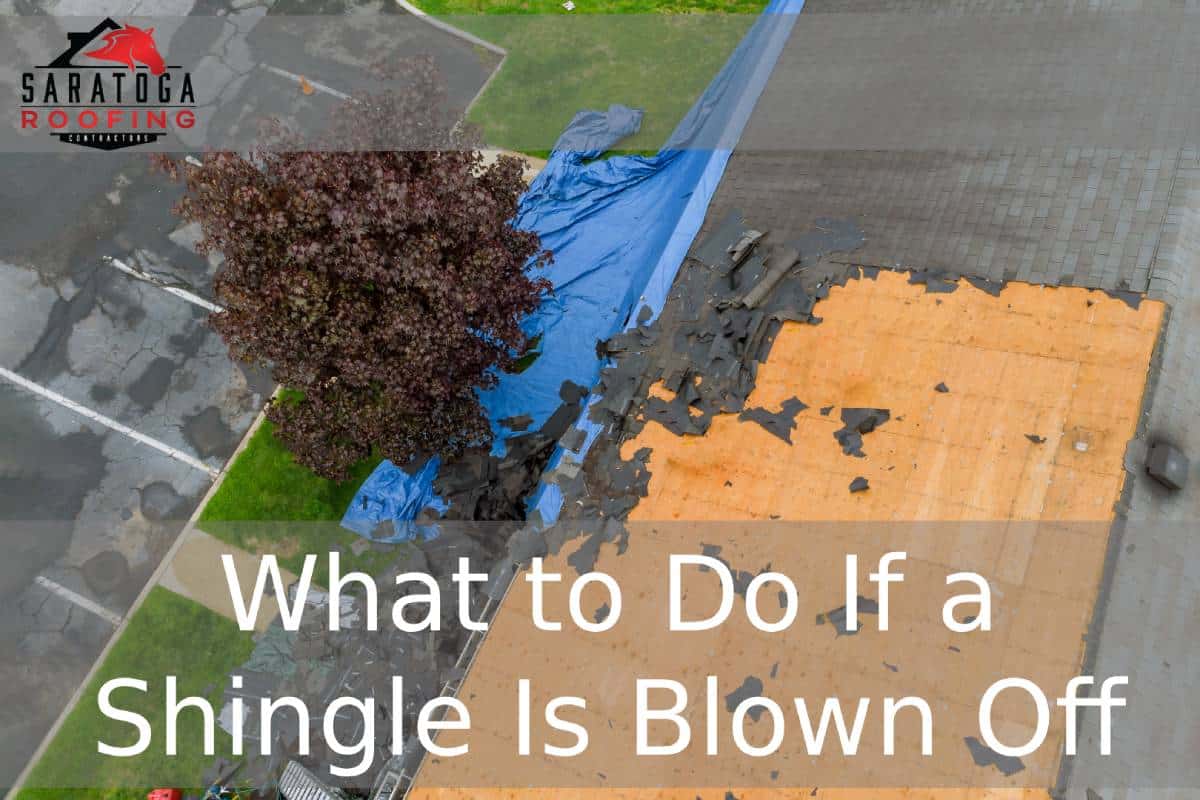
Discovering a missing piece of your roof after a severe storm is a stressful experience for any homeowner.
You might look up and wonder exactly what to do if a shingle blown off during last night’s heavy winds.
Leaving the underlying layers exposed to the harsh elements of Upstate New York can lead to disastrous water damage.
As a local roofing contractor in Saratoga Springs, I have seen first-hand how quickly a minor issue can escalate.
This comprehensive guide will walk you through the essential steps to secure your property and navigate the repair process.
By following this advice, you can protect your home and make informed decisions about your next steps.
Why Shingles Blow Off in the First Place
Understanding the root cause of your blown off roof shingles is critical for preventing future issues.
High wind and severe storm uplift forces are the most common culprits during extreme weather events.
When gale-force winds sweep across your property, they create a vacuum effect that pulls directly on your roofing materials.
Improper installation also plays a major role in premature failure.
Insufficient nailing or incorrect adhesive curing times will leave your roof vulnerable to even moderate gusts.
Age and natural deterioration simply cannot be avoided over the lifespan of a house.
The crucial adhesive strips holding everything together naturally weaken after 10 to 15 years of constant sun exposure.
Previous damage makes cracked or broken shingles much more likely to detach during the next heavy rain.
Structural movement from thermal expansion and contraction slowly degrades the integrity of the entire system over time.
NOTE: Even a single missing shingle can create a chain reaction of water damage, mold growth, and structural issues if left unaddressed.
Immediate Steps — What to Do Right After a Shingle Blows Off
Taking swift and safe action is the most important thing you can do when facing an emergency roof repair.
- Step 1: Ensure personal safety first by staying safely on the ground.
- Do not attempt to climb onto a wet or visibly damaged structure under any circumstances.
- Step 2: Document the damage carefully by taking clear photographs from ground level.
- These images will be absolutely vital for any future insurance claims you might need to file.
- Step 3: Secure loose debris around your yard to prevent additional structural damage or personal injury.
- Step 4: Apply temporary protection if you can safely reach the area.
- Use a heavy-duty tarp to cover the exposed underlayment if rain is forecasted in your local area.
- Step 5: Inspect your attic closely for any early warning signs of water intrusion.
Check for dark staining, wet insulation, or a musty smell indicating trapped moisture.
NOTE: Do NOT use a pressure washer or walk on a damaged roof without professional safety equipment, as hidden structural issues may make it unsafe to stand on.
Assessing the Damage — How Many Shingles Are Affected?
Counting the exact number of missing pieces will dictate your overall repair strategy.
Spotting one isolated missing shingle requires a vastly different approach than dealing with a large bare patch.
You must look closely for dark patches or exposed underlayment from your vantage point in the yard.
Curling or cracked nearby shingles indicate that the surrounding area is also severely compromised.
Check your attic space again for any daylight penetrating through the roof decking.
A comprehensive inspection of both the exterior surface and the interior attic space is absolutely essential.
Missing these subtle clues can lead to hidden rot spreading silently behind your drywall.
Should You DIY or Call a Professional?
Deciding between a DIY weekend project and calling an expert depends entirely on your comfort level and the damage extent.
A do-it-yourself approach might be appropriate if you only have one or two missing pieces on a low-slope roof.
You also need to be entirely comfortable working at heights and have the exact matching materials readily available.
However, you should always call a professional if the damage is located on a steep, high-slope area.
Multiple missing tabs, roofs older than 10 years, or signs of sagging structural damage require immediate expert intervention.
Faulty DIY repairs can easily void your manufacturer’s warranty and result in much more expensive fixes later on.
When in doubt, it is always best to secure a professional assessment first.
You can easily schedule a free inspection with Saratoga Roofing to get an honest evaluation without any high-pressure sales tactics.
Step-by-Step DIY Shingle Replacement Guide
If you decide to tackle a minor missing shingles repair yourself, you must follow strict safety and installation protocols.
You will need matching replacement shingles, standard roofing nails, high-quality roofing cement, and a flat pry bar.
Gather a sturdy hammer, a utility knife equipped with a hook blade, and a secure extension ladder.
- Step 1: Identify and locate all damaged areas to ensure you do not miss any compromised spots.
- Step 2: Lift the surrounding shingles gently with your pry bar to avoid causing any additional cracking.
- Step 3: Remove the damaged shingle by carefully extracting the old nails.
- Cut away any stubborn remnants of the torn material using your hooked utility knife.
- Step 4: Clear the installation zone completely by sweeping away dirt, old adhesive, and loose granules.
- Step 5: Apply an even layer of roofing cement on the exposed area beneath the new placement.
- Step 6: Slide the new piece into place by guiding it gently under the overlapping shingles above it.
- Step 7: Nail the new material securely using four nails along the designated nail strip for a standard 3-tab design.
- Ensure appropriate nail placement following manufacturer guidelines if you are working with architectural styles.
- Step 8: Seal the adjacent areas by applying roofing caulk to any surrounding loose tabs to prevent future wind uplift.
NOTE: Always wear non-slip shoes, durable gloves, and an approved safety harness, and never attempt repairs in windy, wet, or icy conditions.
Filing an Insurance Claim for Blown-Off Shingles
Dealing with your insurance company can feel overwhelming, but most storm-related blow-offs are fully covered under standard policies.
You must first determine if you hold an Actual Cash Value (ACV) policy or a Replacement Cost Value (RCV) policy.
An ACV policy pays the depreciated value of your roof, leaving you to cover the remaining replacement costs.
An RCV policy provides much better financial protection by covering the full replacement cost at today’s market rates.
Always document all exterior and interior damage with extensive photos and videos before authorizing any repairs.
Contact your insurance agent promptly, as most carriers strictly enforce a 12-month window to file your claim.
Request a detailed, written estimate from a certified local contractor to provide directly to your assigned field adjuster.
Proper documentation is the single most important factor in getting your claim approved quickly and fairly.
How to Prevent Shingles from Blowing Off Again
Proactive maintenance is the absolute best defense against the harsh weather patterns we see in Saratoga County.
Schedule regular professional inspections at least twice a year to catch minor vulnerabilities early.
Trim back any overhanging trees to prevent heavy branches from impacting your roof during severe winter squalls.
Consider upgrading to impact-resistant or high-wind-rated materials during your next major renovation project.
Ensure proper installation techniques are followed by always hiring a licensed and certified local contractor.
Applying high-grade roofing cement around the edges of vulnerable areas can add a layer of robust wind resistance.
Taking these simple precautions will significantly extend the lifespan of your entire roofing system.
When Missing Shingles Mean You Need a Full Roof Replacement
Sometimes, a shingle blown off in storm conditions is just a symptom of a much larger, systemic failure.
Multiple tabs blowing off repeatedly across different sections usually indicates widespread adhesive failure.
A structure that is over 20 years old combined with fresh storm damage almost always warrants a full roof replacement.
Extensive granule loss clogging your gutters, widespread curling edges, or severe cracking means the materials have reached the end of their usable life.
Repeated leaks showing up in multiple interior rooms are a massive red flag that patching is no longer a viable option.
Continuing to spend money on temporary fixes will ultimately cost you far more than investing in a new, reliable system.
Our team can help you navigate this transition smoothly and provide long-lasting protection for your family.
Frequently Asked Questions
Q1: Can one missing shingle cause a roof leak?
Yes.
Even a single missing piece immediately exposes the fragile underlayment to water, high wind, and damaging UV radiation.
Without this crucial protective coverage, heavy rain can easily seep into the decking system.
This moisture can cause devastating interior water damage within a matter of hours.
Every opening in your exterior envelope should be treated as a serious emergency requiring immediate attention.
Q2: How much does it cost to replace a blown-off shingle?
A basic DIY repair typically costs between $50 and $200 in raw materials.
A professional roof shingle replacement usually runs between $150 and $500 depending on the specific roof height and pitch.
If you have multiple damaged sections, the labor and material costs can increase significantly.
Securing a professional roof repair guarantees the job is done safely and correctly the first time.
Q3: How long can I wait before fixing a missing shingle?
You should not wait at all.
Every passing rain event exponentially increases the risk of severe water infiltration.
Standing moisture encourages toxic mold growth and can severely damage your internal electrical systems.
Apply a temporary protective tarp immediately and schedule a permanent fix within 24 to 72 hours.
Q4: Will homeowner’s insurance cover blown-off shingles?
Most standard policies do cover storm-related blow-offs caused by extreme weather.
You must review your specific paperwork to verify whether you have an ACV or RCV policy in place.
Document the destruction thoroughly with high-resolution photos before you officially file a claim.
Insurance adjusters typically need concrete evidence that the damage was strictly storm-related and not simply due to long-term neglect.
Q5: How do I find matching shingles for my existing roof?
Check the manufacturer details and product line of your existing materials, which are often printed on any leftover packaging in your garage.
Bring a physical sample of the torn material to a local building supply store for an accurate color and profile match.
Exact visual matches may be incredibly difficult on older homes due to natural weathering and UV fading.
A roofing professional can often source discontinued lines or find the closest possible modern equivalent for a seamless look.

Oleg Levchenko is a co-founder of Saratoga Roofing Co., a licensed and insured roofing contractor serving Saratoga Springs and the Capital Region for nearly a decade.
Building runs in his family – his grandfather, a farmer and builder, rebuilt his village from the ground up after WWII, and that same resilience and craftsmanship shape how Oleg runs Saratoga Roofing today.
Under his leadership, the company has completed hundreds of roof, siding, and gutter projects across Saratoga, Albany, Rensselaer, and Washington Counties, backed by a leak-proof guarantee and a 4.9-star average rating.